10 Ways to Monetize Your Newsletter
Practical revenue strategies for newsletter creators at every stage of growth.

When it comes to earning a substantial income online from an owned audience, there's no greater tool than newsletters.
If you run a newsletter and desire to earn a sizable income, you're in the right place.
In this guide, we'll break down 20 different strategies you can use to monetize your newsletter to generate more income outside of just traditional sponsorships.
Let's uncover the 20 proven strategies you can use to build new revenue streams with your newsletter including real-life examples of creators who capitalized on each method.
A Multi Million-Dollar Newsletter Strategy

Before diving into the 20 methods to monetize your newsletter, we want to share with you some of our insights and trends we're noticing in the newsletter space.
In the past few years, we've seen dozens of new monetization methods emerge for newsletter operators (that we'll cover below).
Perhaps the most powerful monetization strategy we've seen is one that's often overlooked when building a newsletter: Acquisition.
Since 2020, there have been dozens of major newsletter acquisitions we have been keeping an eye on.
In 2020, Morning Brew was acquired by Business Insider for $75 million, thanks to their 2.5 million engaged subscribers after only 4 years.
In 2021, The Hustle was acquired by Hubspot for $27 million after 4 years.
In 2022, Industry Dive was acquired for $525 million after 10 years.
In 2022, Milk Road was acquired for 7 figures in 10 months.
In 2023, The Peak was acquired for $5 million after 3 years.
In fact, we even have some LettrTube acquisition stories worth reading here.
If there's something the world is catching onto, it's that newsletters are incredibly powerful profit-generating machines and worthy media assets to own.
You may be thinking, "well those guys had massive audiences". But, the reality is that in 2026, you don't need to have millions of subscribers or be a media giant to make your newsletter profitable and very attractive to potential acquirers.
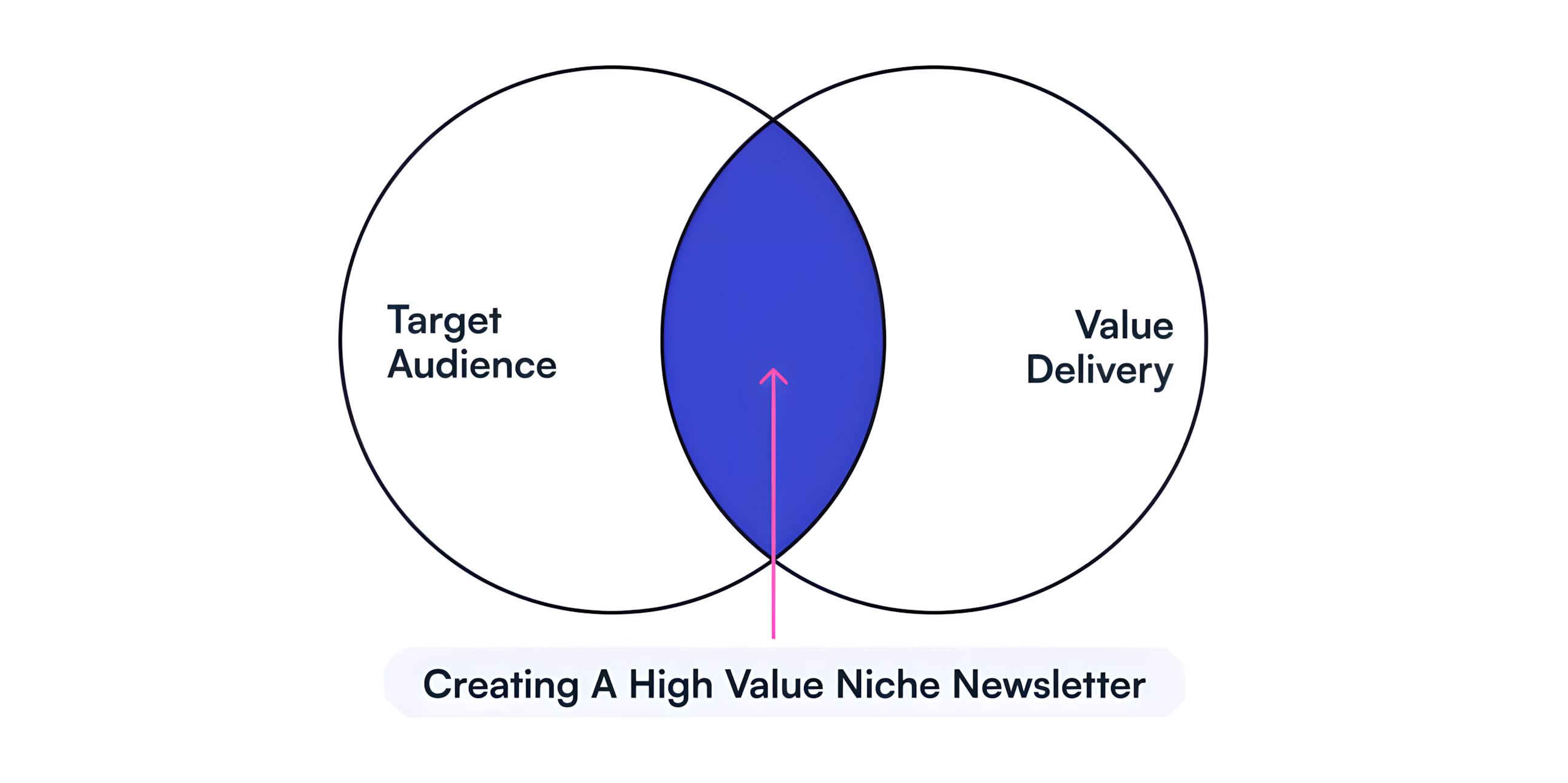
The key is creating niche newsletters for very specific audiences and focusing on delivering value to that audience around your expertise.
20 Proven Ways to Monetize Your Newsletter (With Examples)
With a newsletter, it's never been easier to cut through the noise of the internet's billion-plus websites and social media viral distractions.
Content is being pumped out at astronomical rates.
Instead of sifting through overwhelming information, readers are wanting a single, reliable source of truth to curate relevant and valuable content.
While a newsletter can serve multiple purposes, having a core objective anchors your efforts, and maximizes earning potential with your niche audience of readers.
We will break down each monetization method below in five parts:
- The Strategy: How to plan.
- An Example: How others have done it.
- One Key Takeaway: What you can learn from them.
- Your Next Move: What is the first action step you need to take?
- Resources: Dive deeper and learn.
1. 💲 Paid Newsletter
In 2023, the most important digital revenue stream for publishers was premium, subscription-based content.
Launching a paid newsletter (i.e. premium version of your free newsletter) is one of the most popular ways to monetize your newsletter.
The secret to premium subscriptions?
Creating a community of enthusiasts who value your insights enough to invest in them.
♟️ The Strategy
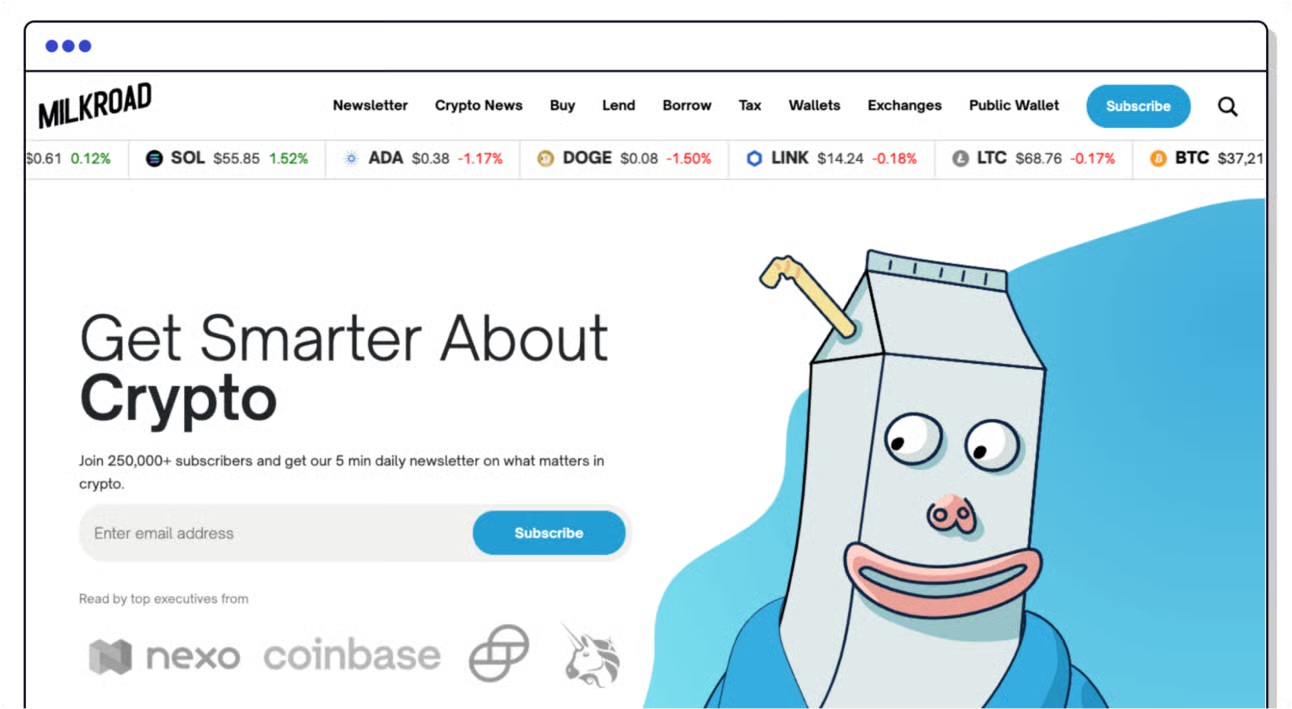
Select a high-value niche where the audience is hungry for specialized insights only you can provide. Offer the majority of your content for free, showcasing unique and exclusive knowledge.
This strategy builds trust and positions the paid newsletter as the exclusive source for premium, indispensable insights, compelling subscribers to invest in the remaining 1% of your exclusive content.
🧠 How the Milk Road did it:
Shaan Puri and Ben Levy combined their passion for cryptocurrency with a commitment to providing simple, understandable daily content.
They leveraged the power of paid social advertising, primarily on Facebook and TikTok, to rapidly grow their subscriber base.
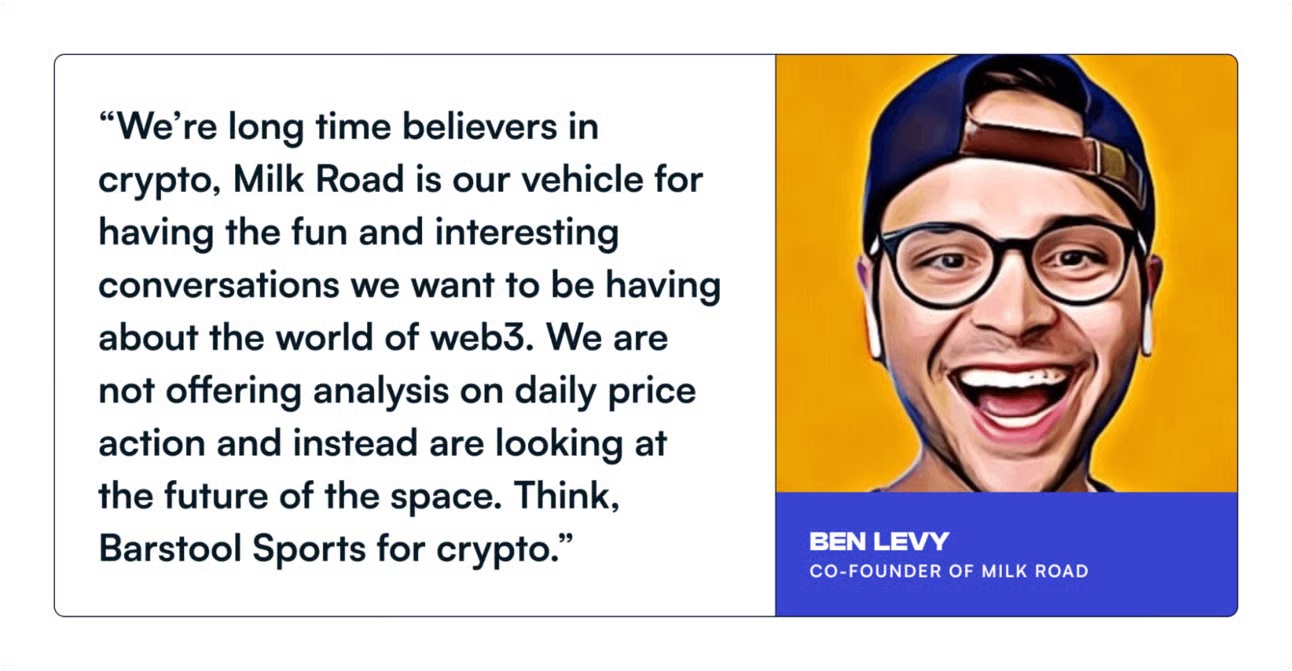
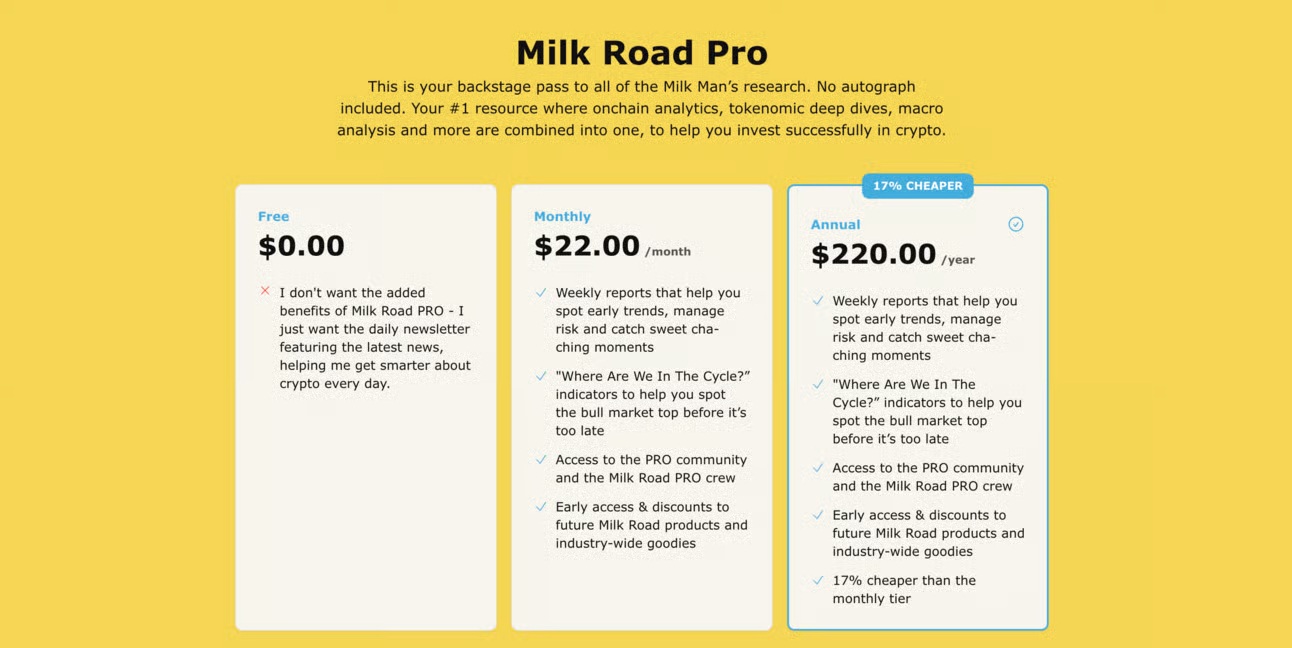
The Milk Road was acquired in 2022 for seven figures. In 2023, they started a paid subscription tier to provide more value to their audience.
📝 Key Takeaway
Milk Road succeeded by focusing on a high-value audience, providing mostly free, valuable content, and positioning their paid subscription (many years after launch) as an exclusive source for indispensable insights with a limited-time offer.
Their free content was not just curated crypto news, but insights backed by logic – making the audience feel smarter.
👷 Your Next Move
Offer free insights that solve real problems. This strategy hooks your audience, creating a need for your premium, exclusive insights.
You don't need to sell yourself (directly), start by sharing sneak peeks of your premium content on social media channels like Twitter to create a sense of FOMO and redirect people to opt for a paid subscription to your newsletter.
2. 🫂 Paid Community
While a paid newsletter offers readers the chance to read a newsletter with greater depth & value, a paid community offers readers the chance to step into a newsletter creator's "inner circle" and build unique relationships.
It's a dynamic space where readers become members. It enables subscribers to form meaningful connections, engage in valuable interactions, and collaborate toward mutual goals.
Unlike one-way content consumption, a paid community fosters two-way communication.
♟️ The Strategy
First, define diverse interaction avenues—discussions, polls, live events—ensuring varied engagement opportunities. Next, strategize membership tiers, offering distinct benefits or equal access to cater to diverse preferences.
A well-defined launch plan, involving subscribers in the pre-launch phase, generates anticipation.
🧠 How Michael Houck did it:
Houck's Newsletter is a publication geared towards founders that helps them advance their startups, find investors, and raise capital.
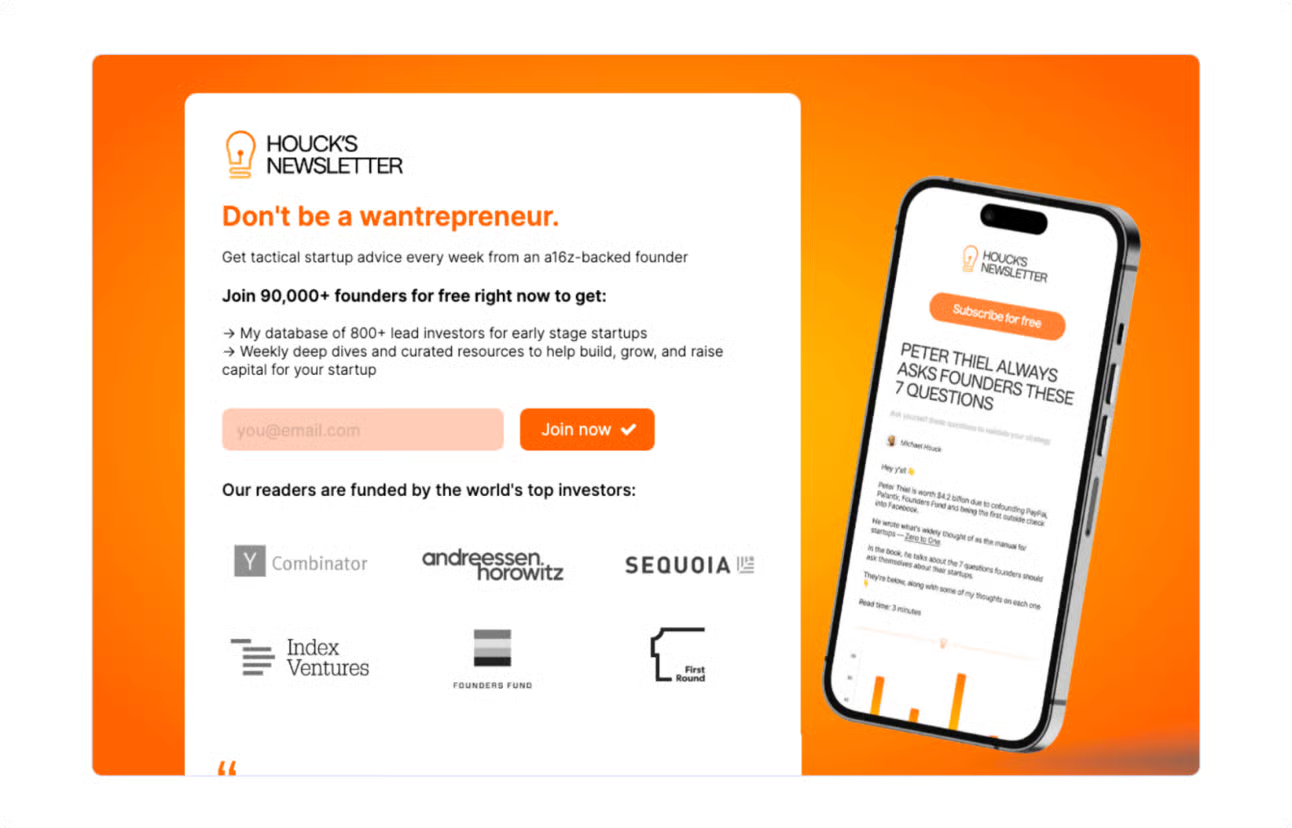
Michael Houck offers a free newsletter to his list of 90,000+ subscribers that's jam-packed with valuable insights for founders to succeed with their startups – including firsthand experience as a founder himself.
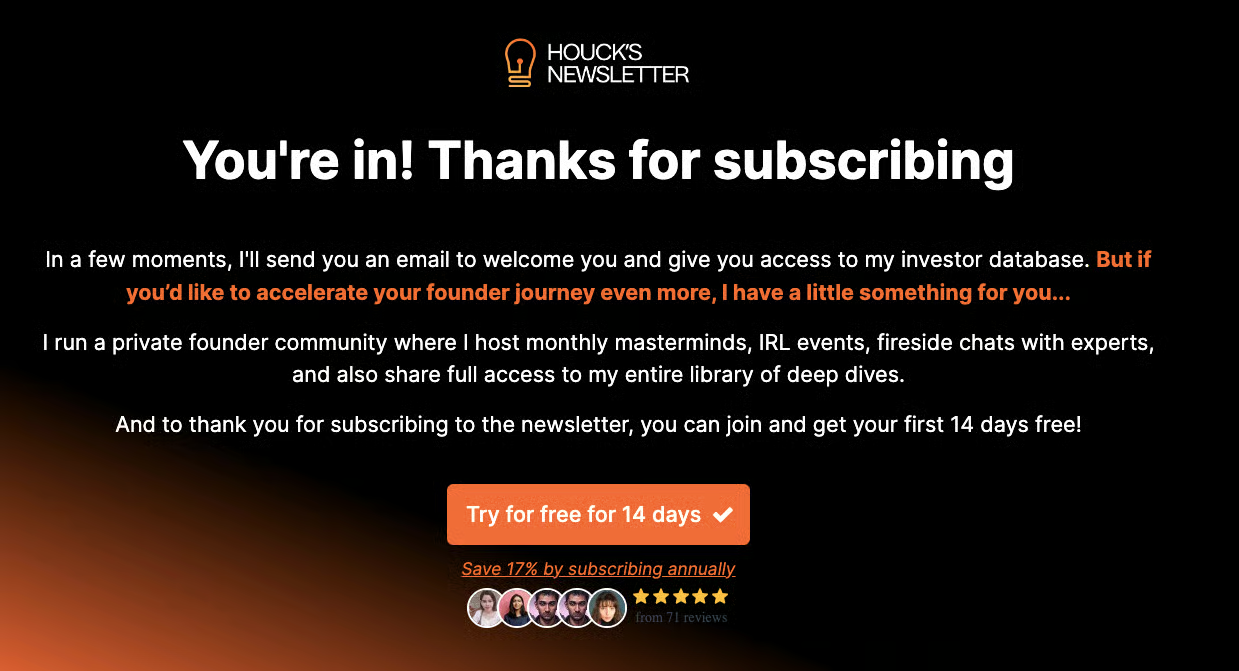
After someone subscribes to Michael's free newsletter, they're immediately given the opportunity to join his private founder's community with a free 14-day trial.
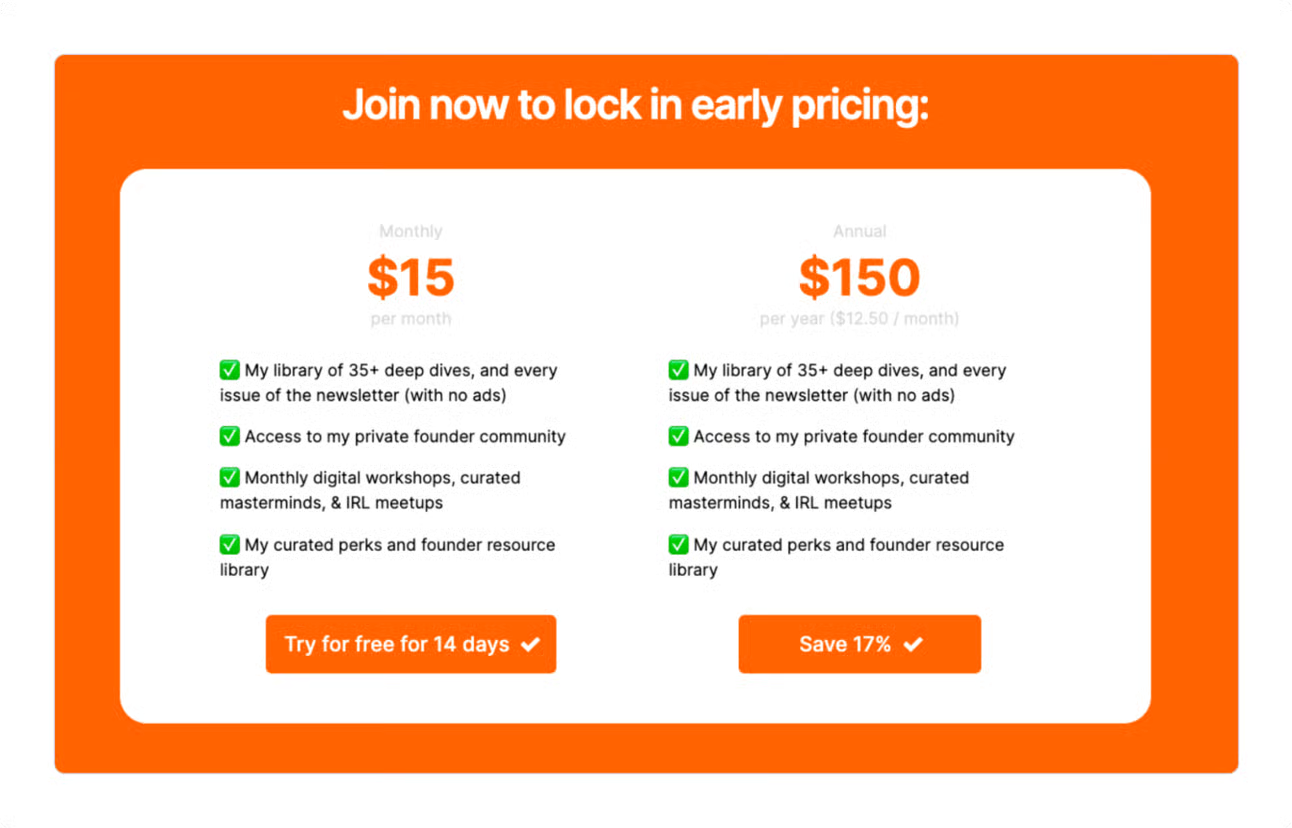
750 founders have become members so far. He charges $15/mo or $150/year.
Members pay just $15 per month to gain access to a wide spread of features like:
- Access to his private community
- Deep dives on founders
- Workshops, masterminds, and meetups
- Founders resources and curated perks
- And more
Now, Michael's earning more than $100,000 per month from his newsletter. That's more than most people make in a year at a regular job.
📝 Key Takeaway
It didn't take long for Michael to get his newsletter off the ground. He sought advice from others who have gone before him in the newsletter space like Sahil Bloom and Lenny Rachitsky.
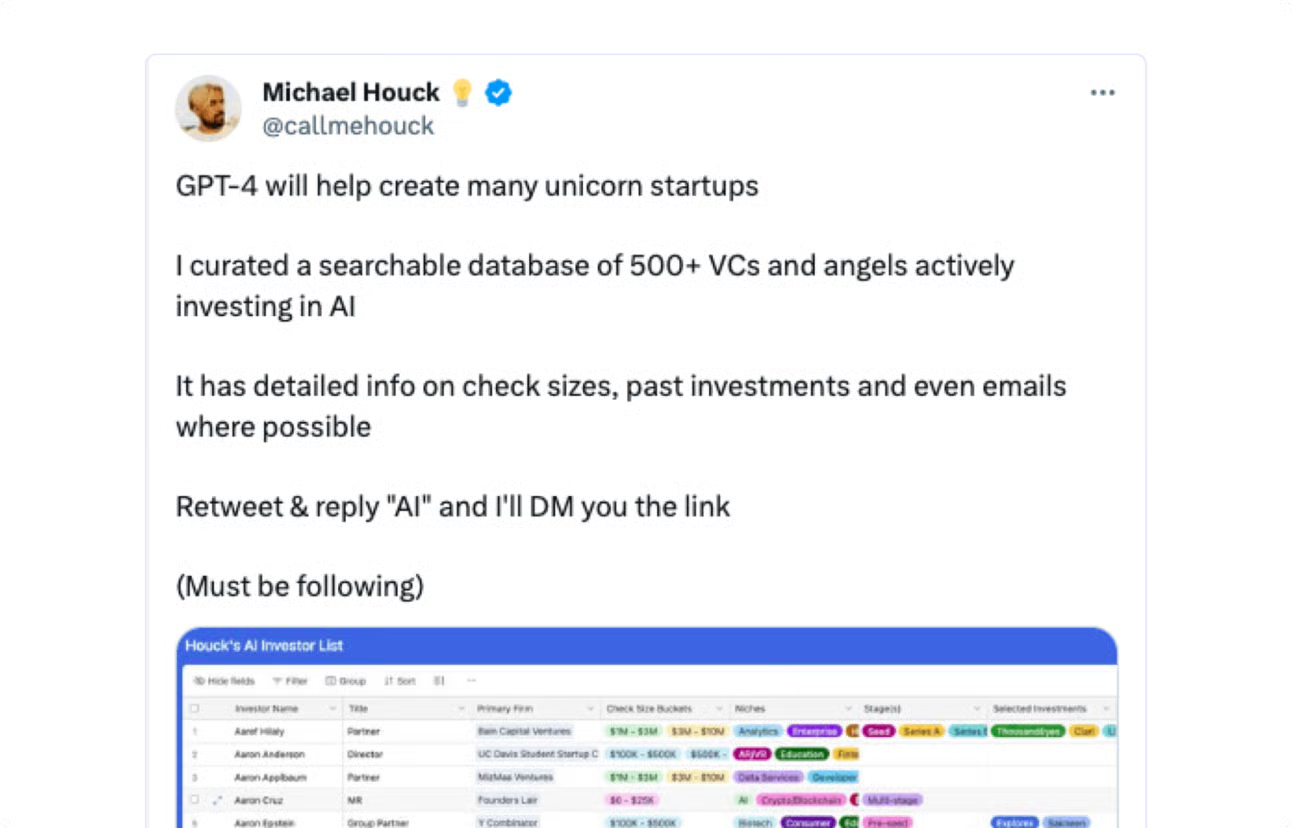
Within a year, Michael was able to grow to about 90,000 subscribers. Michael also leveraged giveaways on X (Twitter) to grow his list. This strategy got him to 10k within weeks.
��� Your Next Move
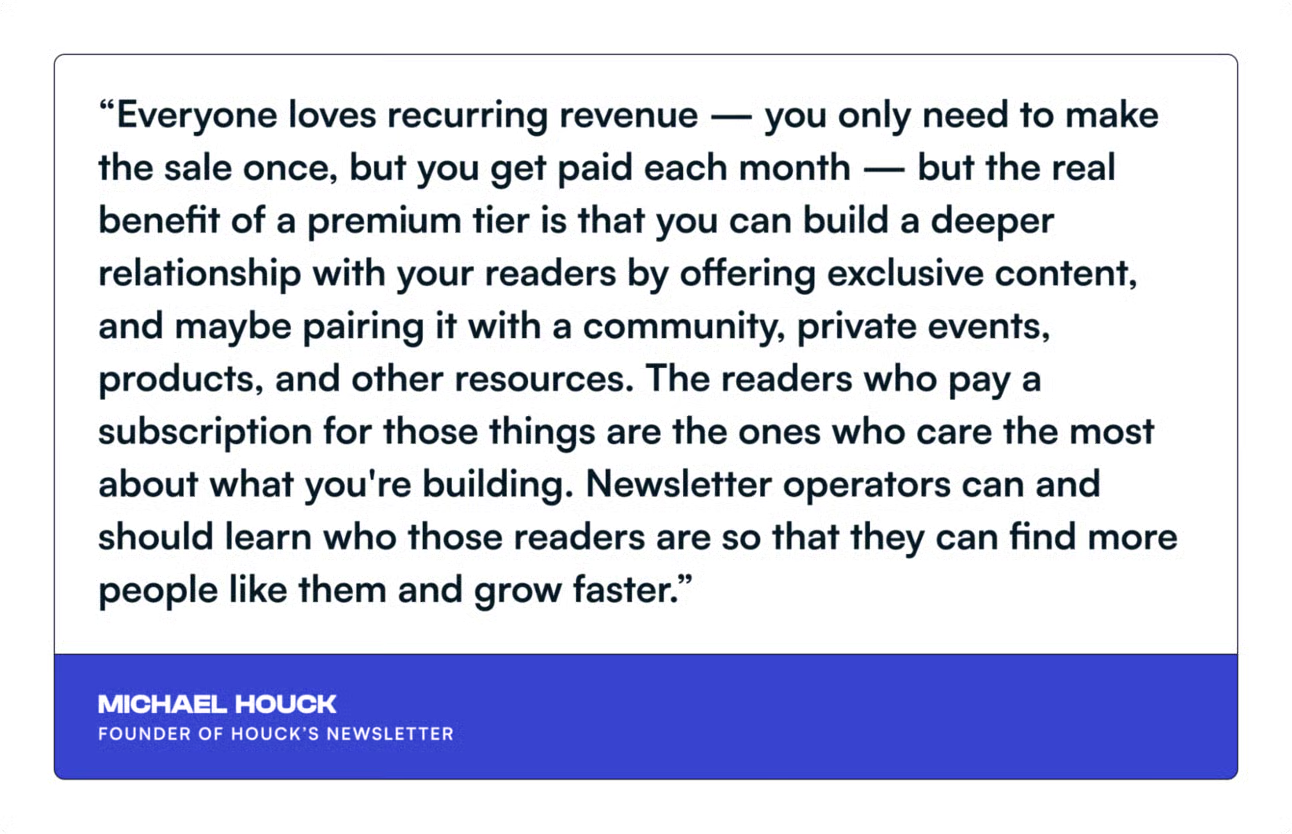
Paid communities typically center around specific niches– start by organizing virtual meetups, webinars, and networking events through your newsletter. These events will facilitate connections among like-minded folks, and that's exactly the kind of engagement we need to kickstart a paid community.
There are many ways to structure communities, access, and pricing. Listen to your audience to structure your community in a way that brings value.
📕 Resources
- Building a Successful Paid Community: A Guide
- Beyond the Inbox: The Power of Community
- Building your Newsletter Community
- How Houck Leveraged His Personal Brand to Reach Over 18,000 Founders
3. 📚 Curated Content
Curated content combines the elements of a digital product with a paid newsletter.
In a way, curated content is a blend of the two. Like many of these strategies there is a very natural crossover.
Curated Content often comes in the form of a premium report, usually for a B2B audience.
The perk of launching a newsletter with an option to upgrade to curated content is that the audience doesn't have to go through hundreds of websites to know about a particular topic. They're paying for curated access to niche knowledge.
They can dive super deep into a topic, accessing up-to-date industry data, research, and breakdowns in a quick, simple delivery method — a newsletter.
This works extremely well when you dive deep into a niche. Avoid broad curation when possible.
♟️ The Strategy
Deep-dive into industry trends with exclusive data-driven insights while offering subscription tiers, granting access to varied perks like early content access and advisory services. The curated content should be more insightful than just giving away information. Find your unique edge.
These tiers cater to different subscriber needs, from basic content access to personalized guidance, fostering value and engagement.
🧠 How Trends.vc did it
Dru Riley, the founder of Trends.vc, transitioned from a software engineering job to pursue his entrepreneurial journey.
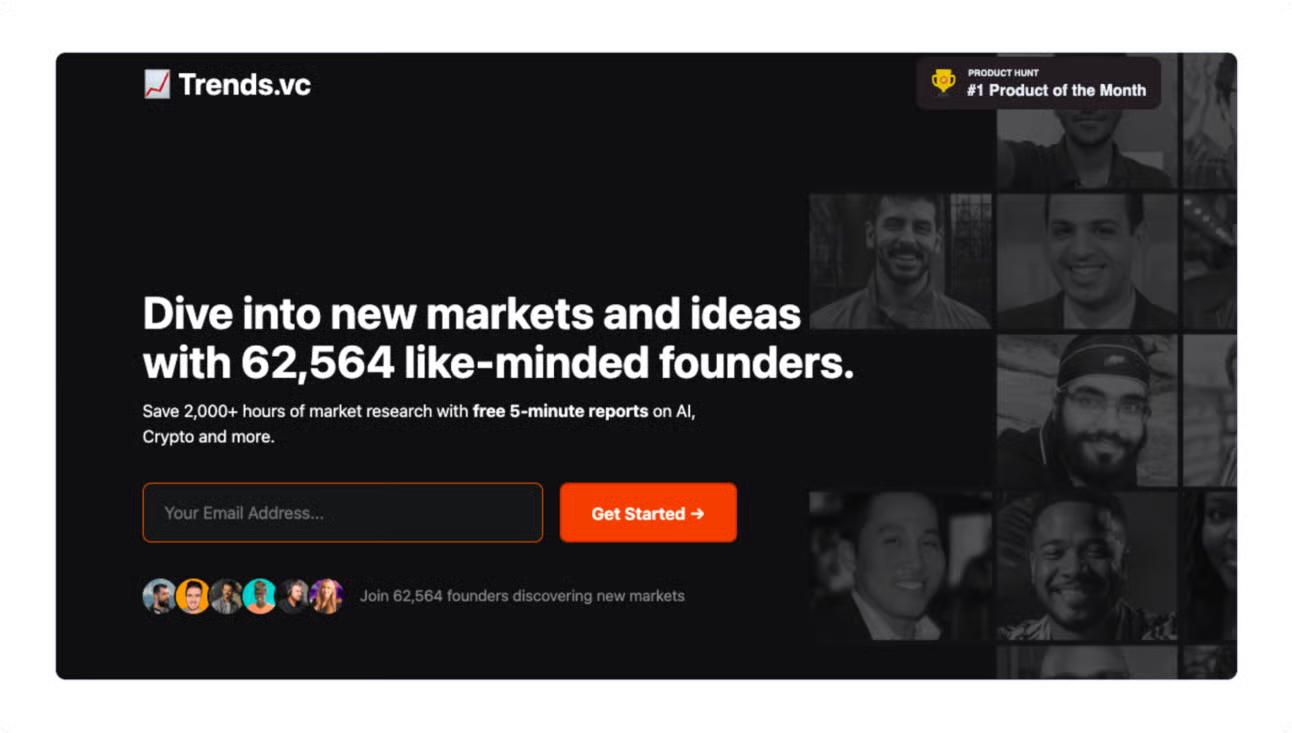
He explored multiple business ideas before launching Trends.vc in 2019. Despite gaining subscribers and recognition, he initially struggled to monetize effectively.
Dru's key breakthrough came with a tiered monetization model, offering premium insights within his free reports.
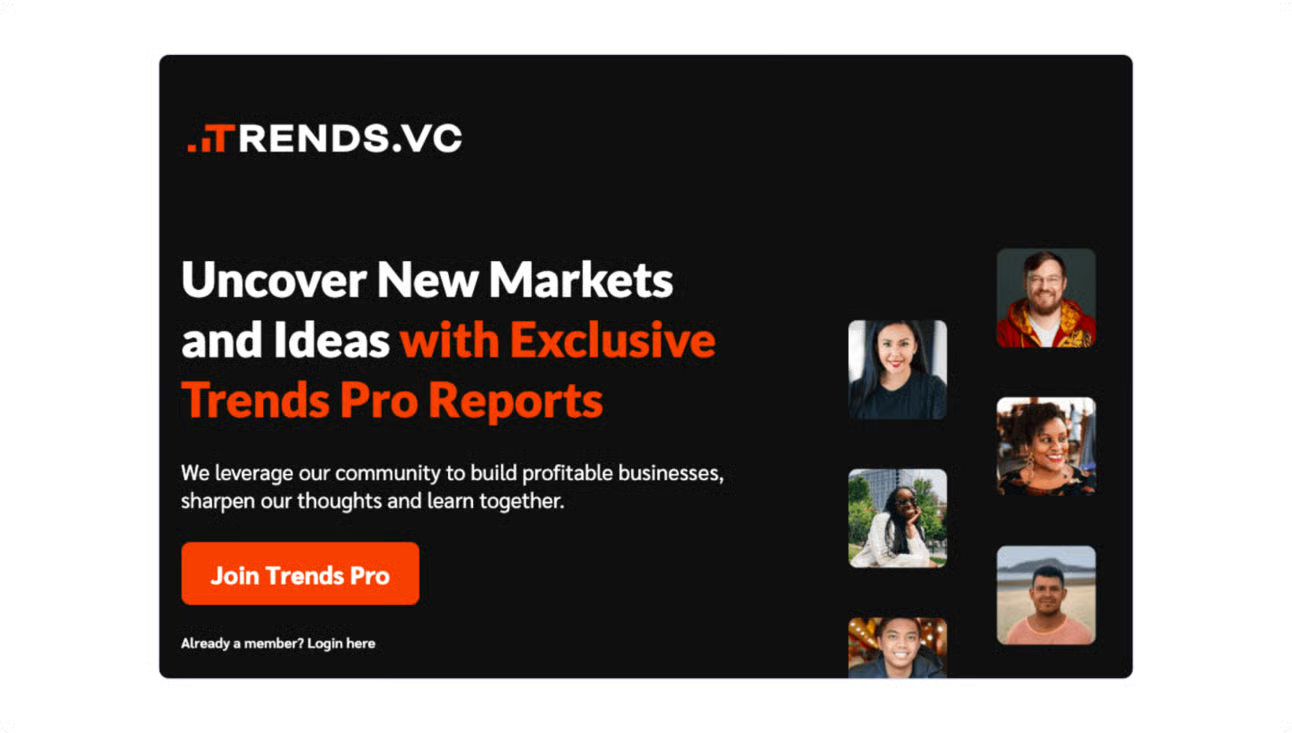
Each of his curated reports includes a few sections like:
- The problem a certain trend solves
- Those leading the trend in the industry
- Dru's predictions for the trend
- The opportunities and risks associated with the trend
- Key lessons on how to implement those trends
- "Haters" – which features the opposing take on the trend from others in the space
📝 Key Takeaway
Test various offers to engage your subscribers. Dru successfully implemented an annual subscription for bi-weekly reports and community access, boosting visibility by featuring others in his content and sharing it on platforms like X.
Collaborations can amplify your content's reach as featured parties often reshare it. His partially free reports help him tease out content while leaving people wanting more.
👷 Your Next Move
Dig into your audience's pain points via surveys and forms to identify a knowledge gap you can fill with curated & researched content.
Bonus Tip: Only curated content is not quite enough, make sure you have a unique edge that adds more value to your curated insights. Your unique opinion and insights will help make your voice one of one.
4. 🤝 Sponsorships
Sponsorships, or sponsored ads, are one of the most popular & common ways to generate revenue from your newsletter. This is typically the default monetization strategy most newsletter operators use.
The idea is once you've built up a decent-sized subscriber base, you can leverage your reach and engagement to persuade congruent brands to advertise in your newsletter.
You don't need tens of thousands of followers to start earning from ads either. Eli Weiss from All Things CX & Retention landed his first sponsor for $1,000 before he sent his first newsletter.
When you share sponsored content that interests your target audience, it creates a win-win-win situation: your audience gets even more value, the sponsor generates awareness + sales, and you earn ad revenue.
♟️ The Strategy
The key is to stay true to your audience. Only partner with sponsors whose products or services genuinely benefit your readers and that you personally believe in.
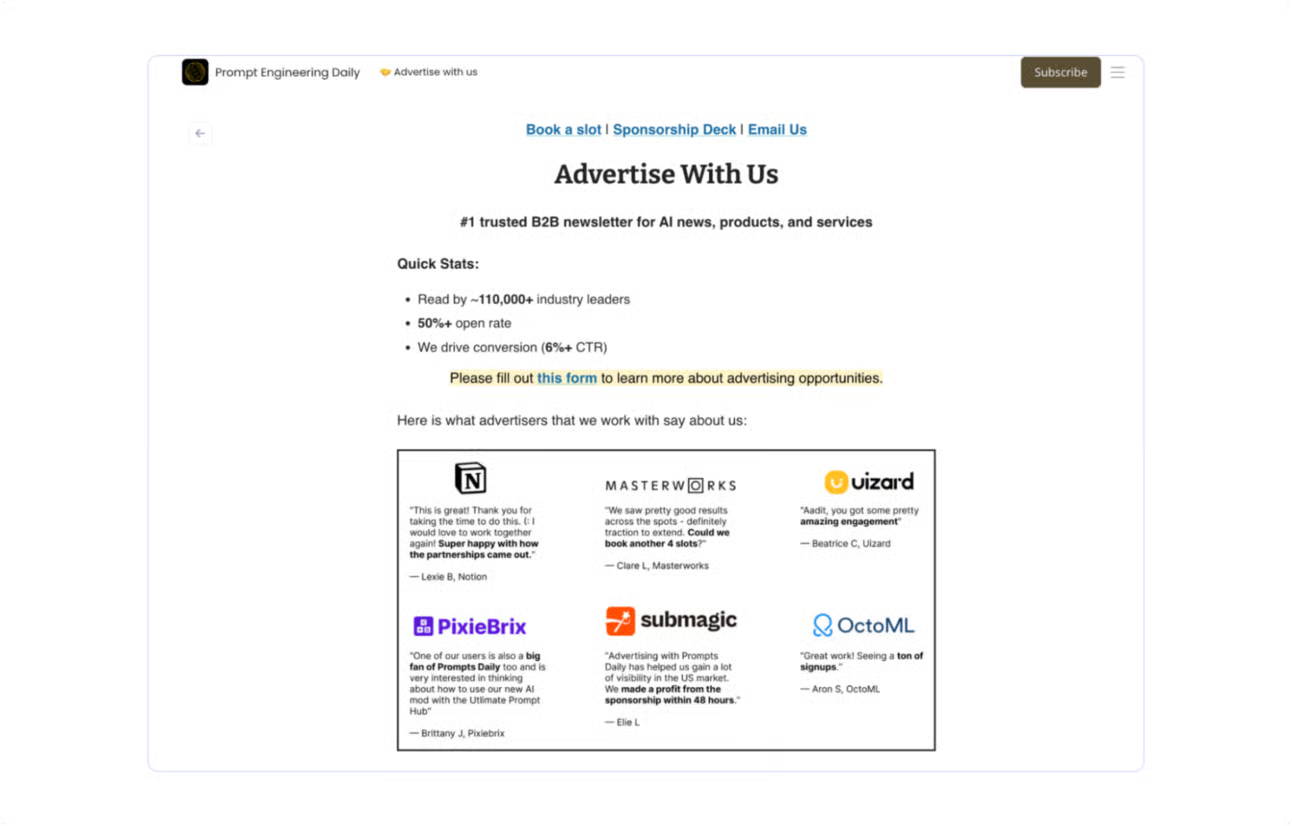
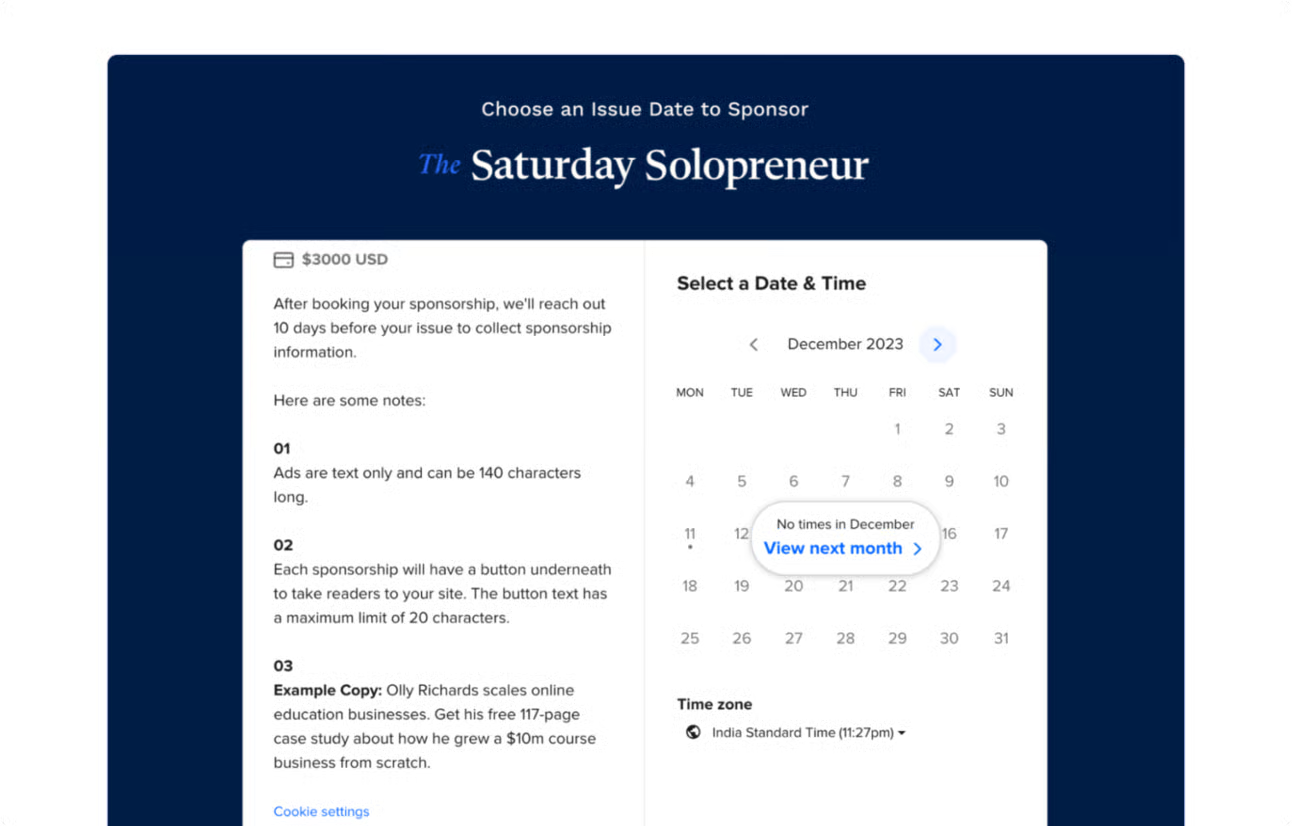
Also, craft a sponsorship page – outlining sponsorship opportunities. Include key details like your audience stats, ad formats, and contact information.
Here are a few examples:
Prompts Engineering Daily's sponsorship page on LettrTube:
Justin Welsh's Saturday Solopreneur Sponsorship calendar:
🧠 How Zain Kahn from Superhuman did it
Zain Kahn writes an AI daily newsletter to — get this — 450,000 people. Yes, he has nearly half a million subscribers on his LettrTube newsletter.
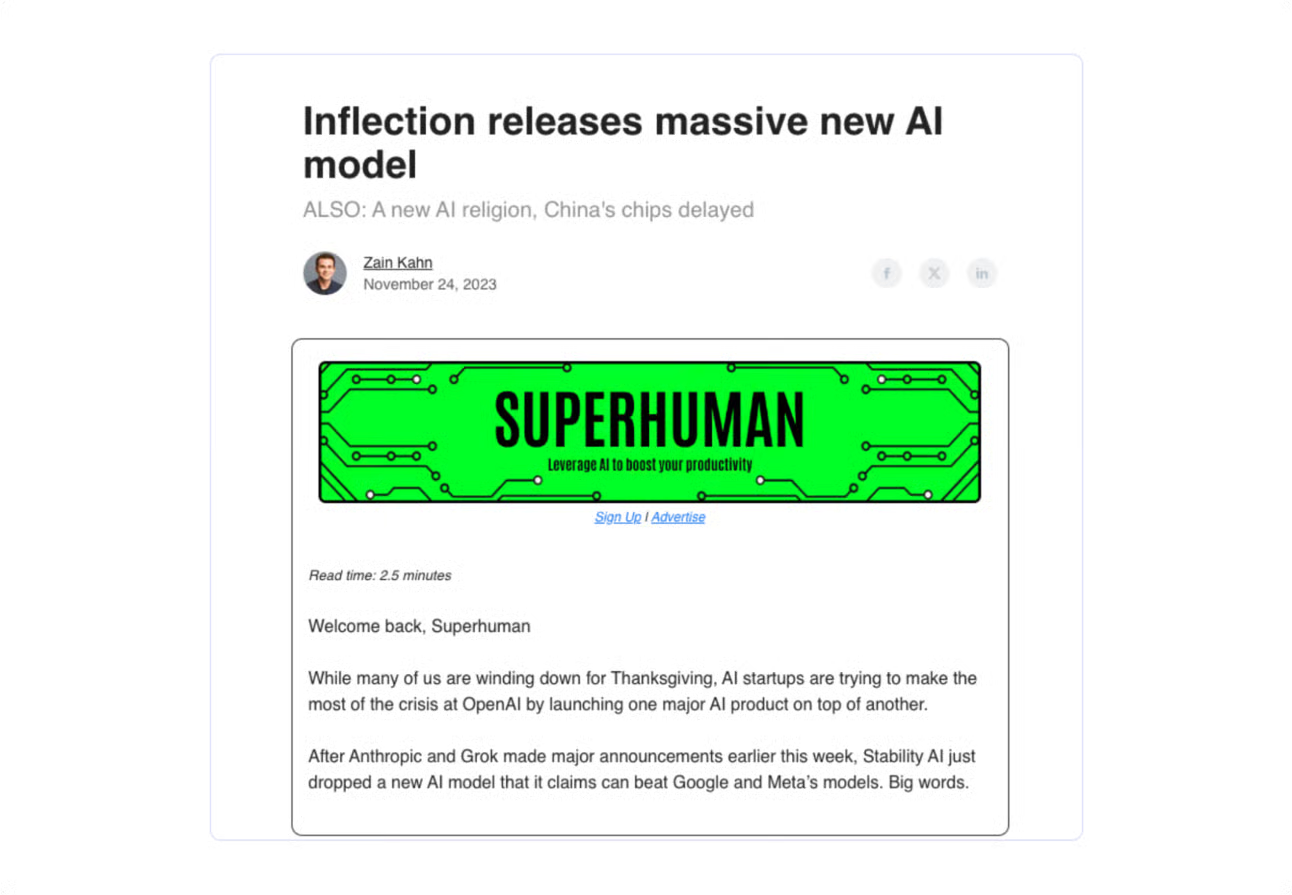
Zain places at least one sponsored ad in every single issue. He charges advertisers a fixed amount for each ad placement, which includes a graphic and written copy about the sponsor's product or service.
Here is an example:
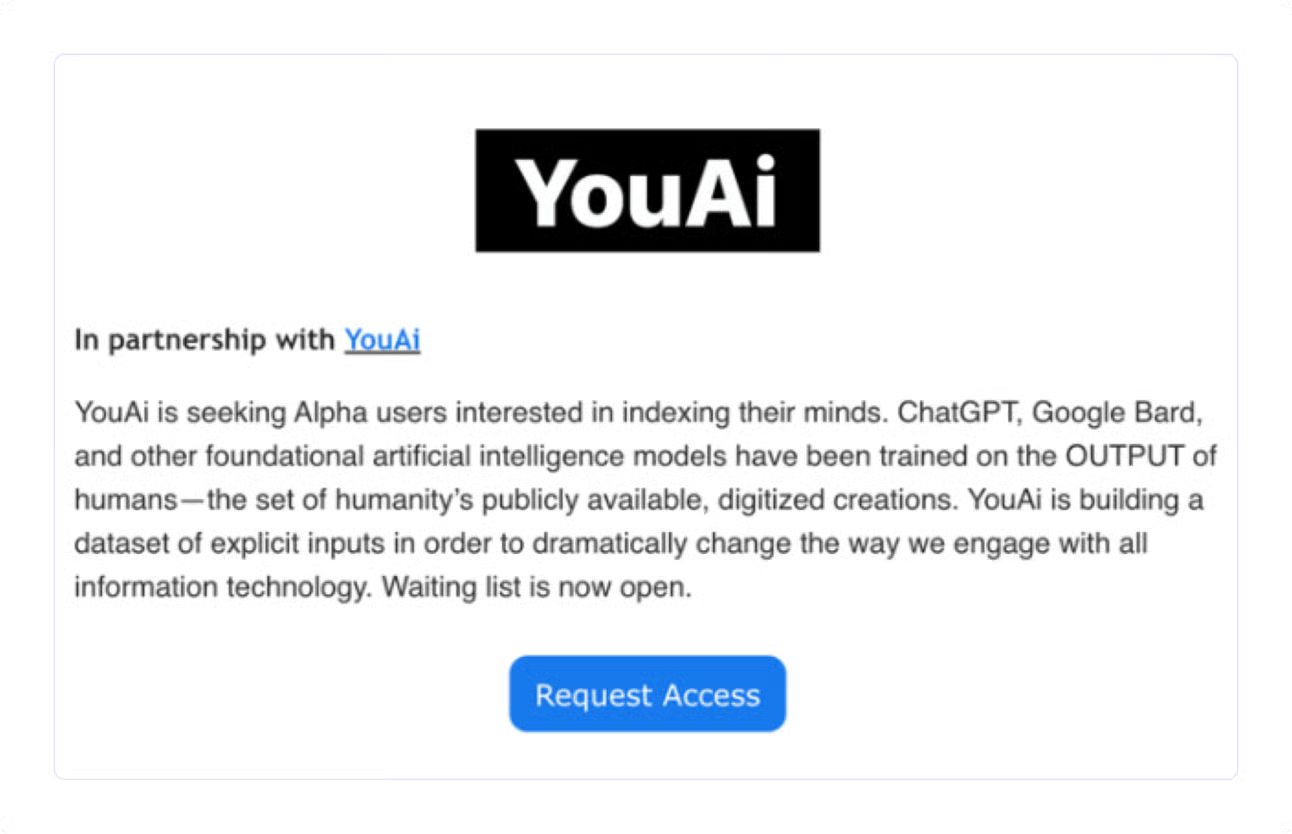
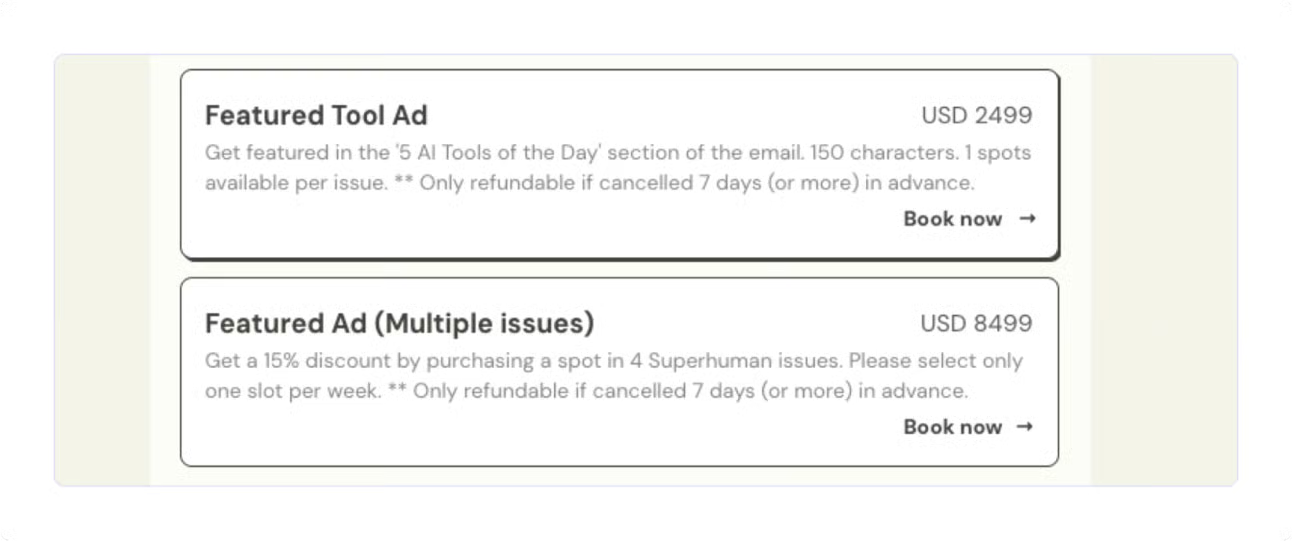
At 450,000 subscribers, his primary ads start at $2,500. Yep, he earns $2,500 for every featured ad he places in his issue — and he sends these out every day.
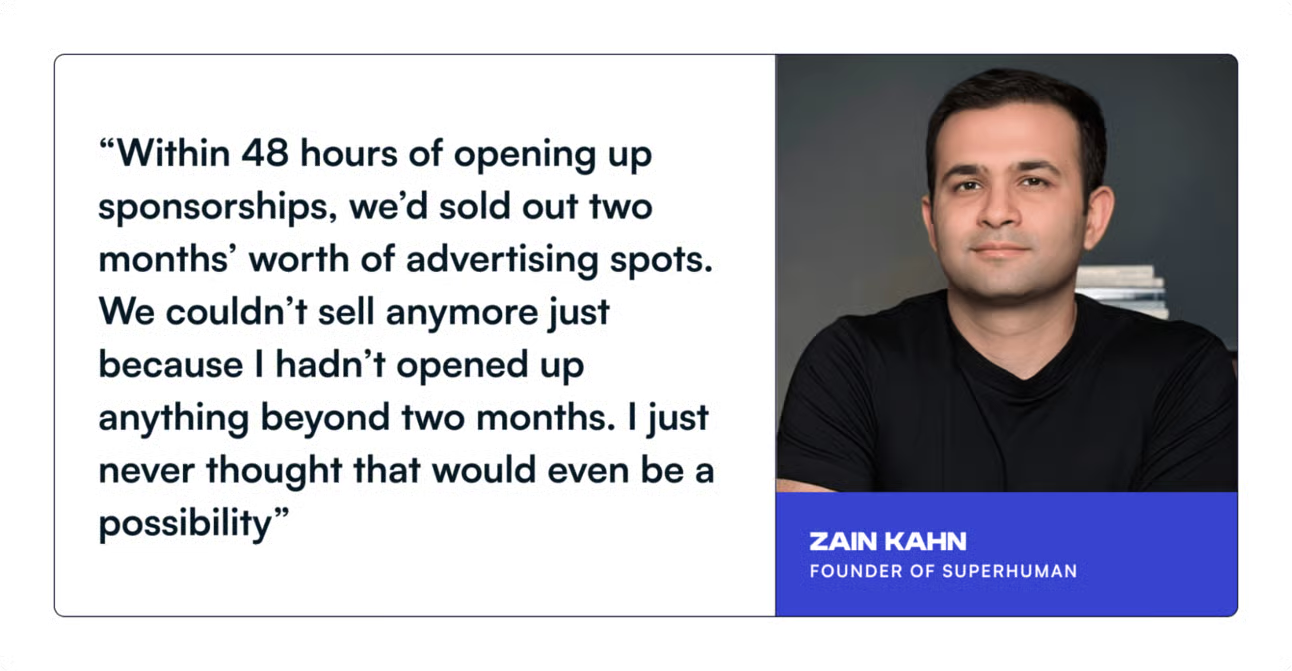
Zain does a great job of selling his advertisers on why they should sponsor his newsletter.
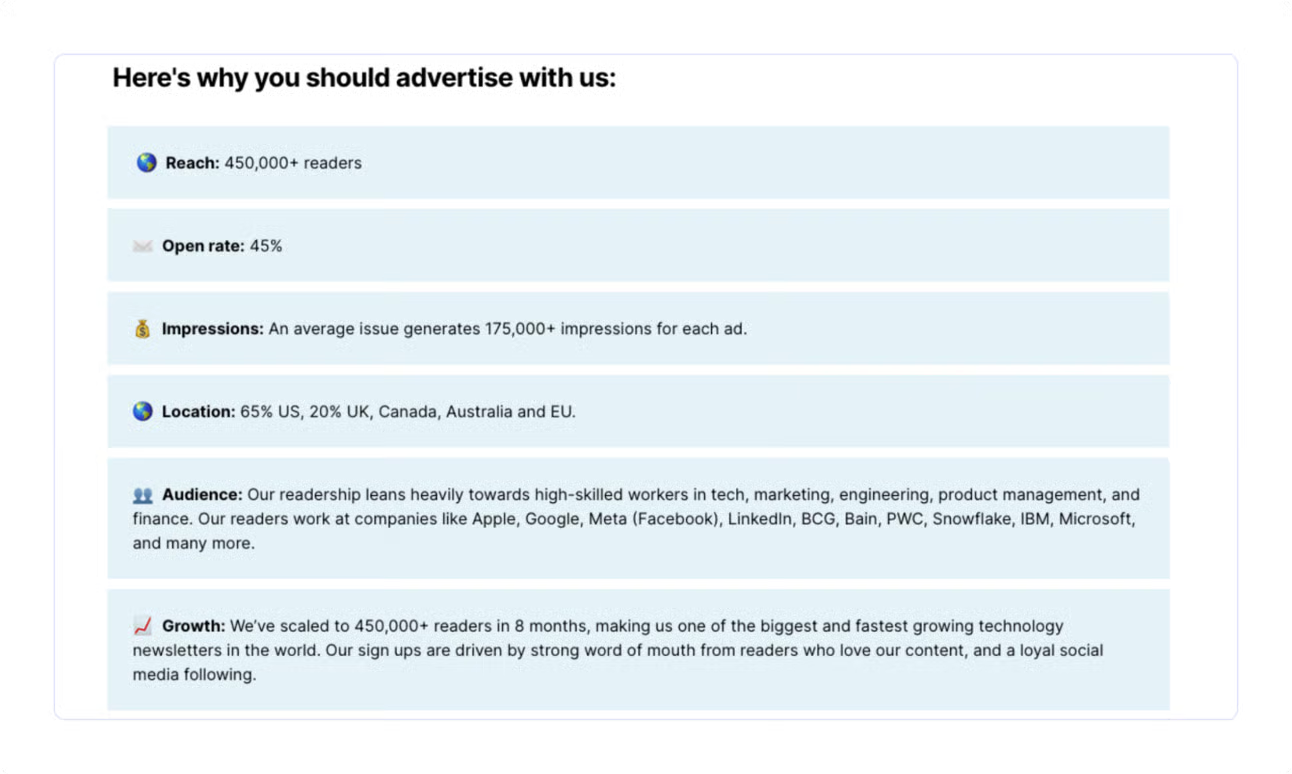
Once they click through, they're taken to a landing page where they can see how valuable Zain's audience and engagement are.
📝 Key Takeaway
Leveraging LettrTube's audience acquisition data and UTM integration, Zain tracks reader sources for audience growth. Analyze detailed acquisition data and optimize growth strategy using UTM tracking. This will also help you stay transparent with your sponsors and tell them exactly what your audience is all about.
👷 Your Next Move
Implement UTM tracking, surveys, and build an audience profile to show off to potential sponsors. Once you know the insights, you will be able to clearly communicate the value advertisers receive in exchange for their investment.
Bonus tip: Leverage LettrTube's Ad Network to speed up and automate the sponsorship process to earn more with minimal effort.
📕 Resources
- LettrTube Ad Network
- 6 Steps to Securing a Sponsor for Your Email Newsletter
- Biggest Mistakes To Avoid With Email Newsletter Ads
- How To Create a Newsletter Sponsor Page
- Superhuman by Zain Kahn: 135,000 Readers in 3 Months on LettrTube
- 2023 Guide To Email Sponsorships
- How to Sell Newsletter Ads – Advice and Examples From Experts
- Introducing LettrTube's built in ad network
- How to Monetize Your Newsletter with Ads & Sponsorships - LettrTube 101 (Tutorial)
5. 🧾 Affiliates
Affiliate sales are a shift from conventional promotions to a strategic recommendation-based approach. You promote a product, someone clicks your link (and buys someone else's product), no fulfillment, and you get paid a commission for the sale.
The potential for earnings as an affiliate is limitless and will often far exceed sponsorship revenue if you're willing to bet on your audience's engagement.
♟️ The Strategy
Instead of simply promoting affiliate product links, provide in-depth analyses and comparisons. Explain why you recommend these products, highlighting their features, benefits, and potential drawbacks. This is all made easier of course if you are a customer yourself (which we recommend).
You can even create newsletter editions that feature a selection of different curated affiliate products. Organize them based on specific themes or needs that resonate with your audience.
🧠 How Matt McGarry did it
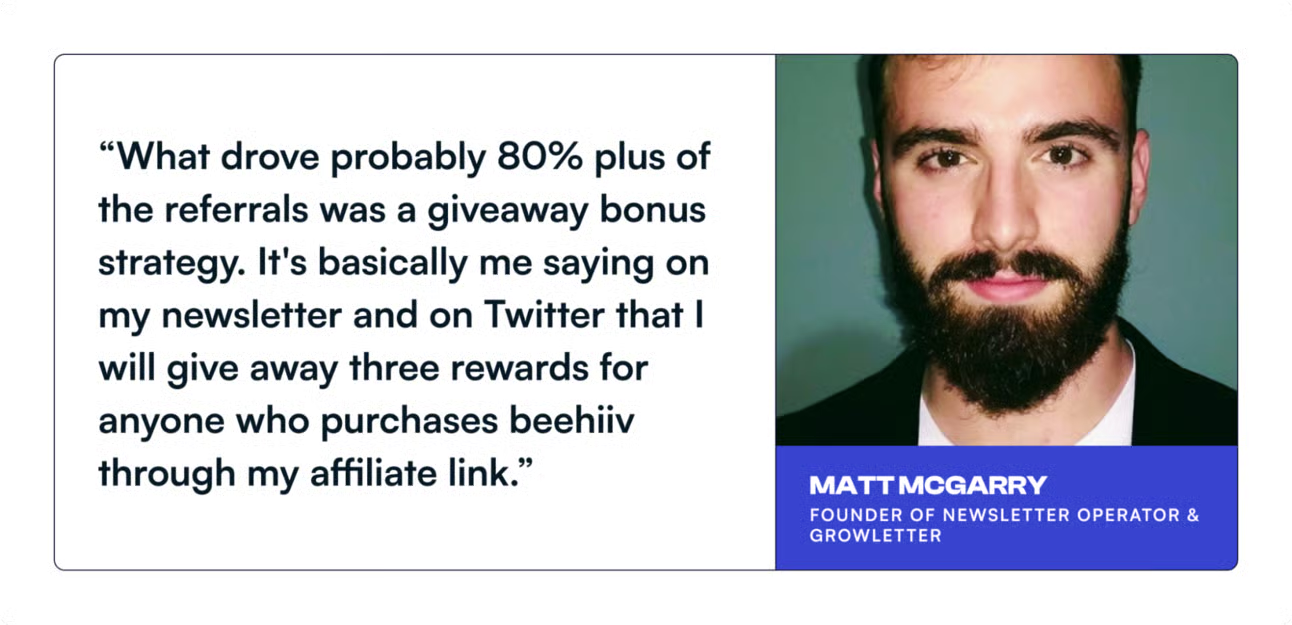
Matt started his agency GrowLetter last year and partnered with top newsletters like ExecSum, The Rundown, The Hustle, Milk Road, and more.
While developing his newsletter agency, he found out about LettrTube and quickly fell in love with the platform.
Soon after, he started recommending LettrTube to all of his agency clients (and his newsletter subscribers). When LettrTube launched its partner program, he hopped on board immediately.
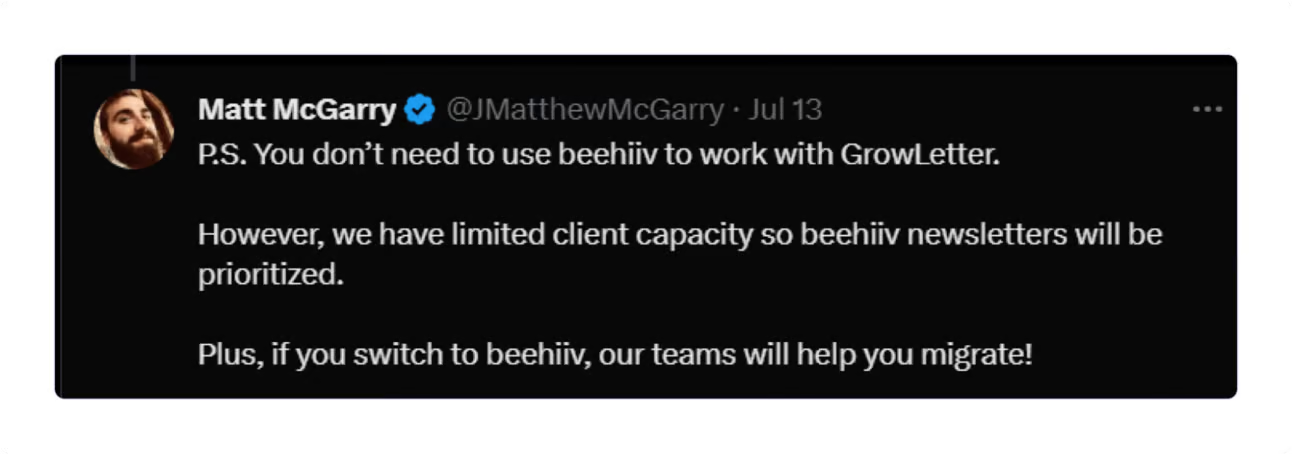
In addition to recommending it to his newsletter audience, he also pushed the benefits of LettrTube and his agency's preference to prioritize newsletters on LettrTube.
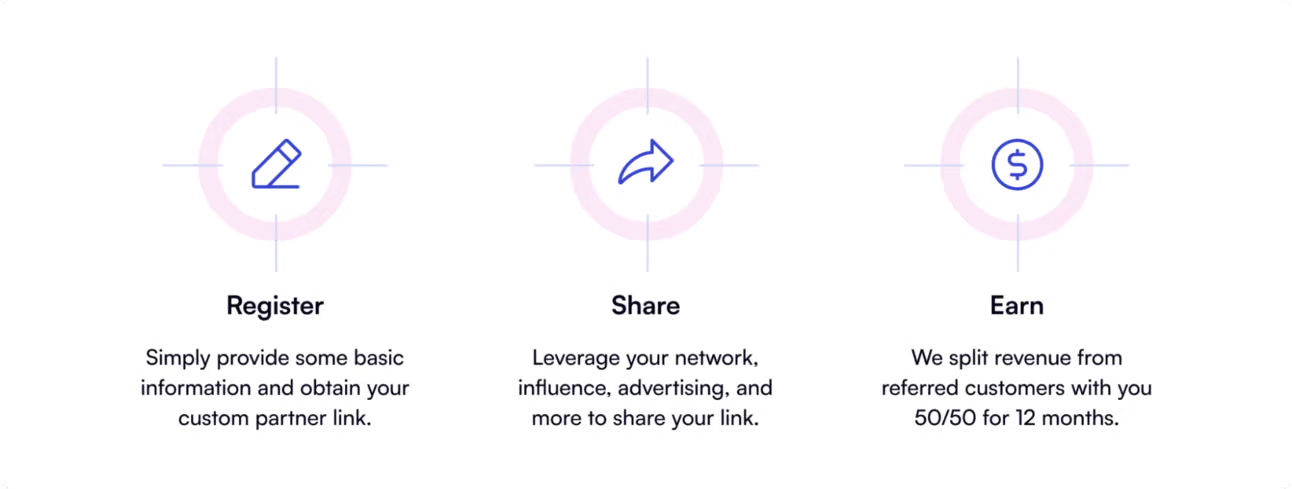
The crazy part is — he earns 50% commissions (for an entire year) every time someone signs up to LettrTube through his partner link. This means if someone gets LettrTube's Grow plan at $49/month, he'll earn $24.50/month for a year ($294).
If five people sign up for LettrTube's Scale plan through your affiliate link at $99/month, you'll earn $247.50 every month on autopilot (or $2,970 total).
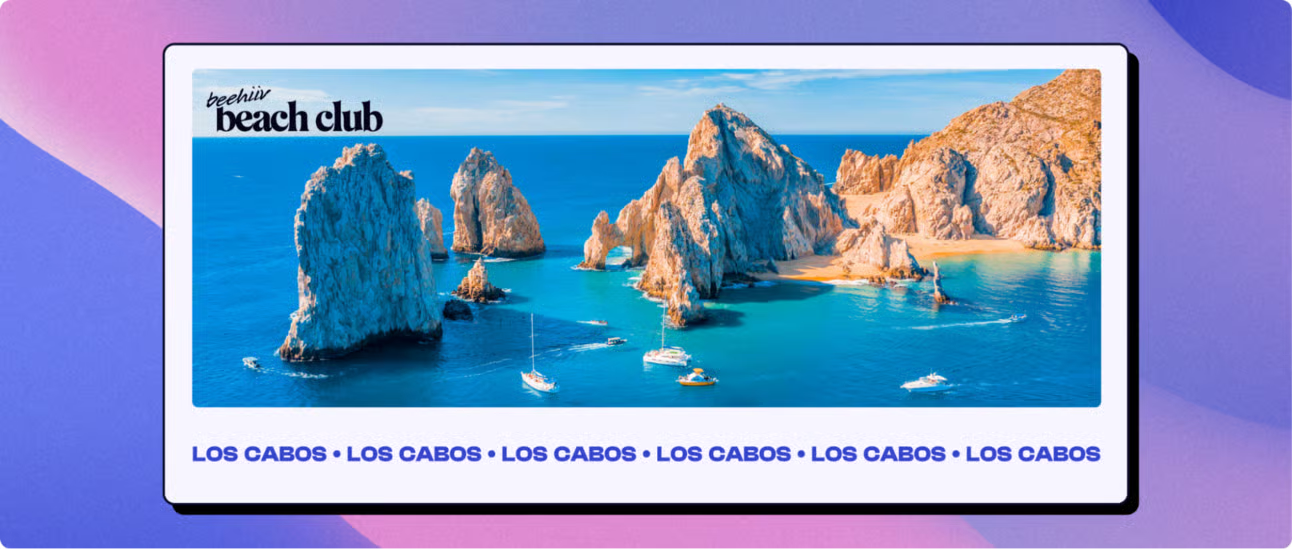
In 2023, Matt was the first winner of LettrTube's Beach Club – a LettrTube partner giveaway that offers quarterly trips around the world for the person who generates the most affiliate sales that quarter. Not only did Matt earn thousands as a LettrTube affiliate, but he also won an all-inclusive round trip for two to the Atlantis in the Bahamas.
📝 Key Takeaway
Your endorsement adds authenticity to your recommendations. The more you believe in the product, the more likely your audience will as well. If you understand their wants and needs (it also makes it easier to sell them on it).
Also, be transparent with your affiliation, and clearly disclose that it's an affiliate promotion to build trust with your audience. Being honest with your audience will build trust leading to more affiliate commissions long term.
👷 Your Next Move
Identify relevant affiliate products in your niche that can bring your audience value (ideally, products that you actually use).
Get your own unique affiliate link, and remember to include them in your newsletters organically and analyze the performance.
Bonus tip: With the LettrTube partner program you can earn 50% of revenue for referring new paying customers to LettrTube, no matter what your niche is.
📕 Resources
- LettrTube Partners
- How to Add Affiliate Links to Newsletters
- From Newsletter Operator to Beach Club Winner: Matt McGarry's Passive Income Strategies
- Practical Growth Strategies from Marketer Milk
- How Victoria Kurichenko Earns $500+ per Month as a LettrTube Partner
- Partner Program Introduction - LettrTube Partner 101 (Tutorial)
6. Courses
Through your newsletter you already share valuable knowledge. Now it is time to package that knowledge up and deliver it. It can be about writing, designing, managing finances, or just about anything related to your specific niche. Courses offer a great way for you to package up your knowledge.
♟️ The Strategy
Understand what your audience is after. It's important to know what your audiences' pain points are, especially when it comes to the knowledge they're after.
Once you know this, you can validate audience demand. Start by solving one specific problem for one specific person in one specific way. Then, introduce the idea of a course to test the waters. Let your audience know you're thinking of creating one and see what kind of response you get.
🧠 Here's how Justin Welsh did it
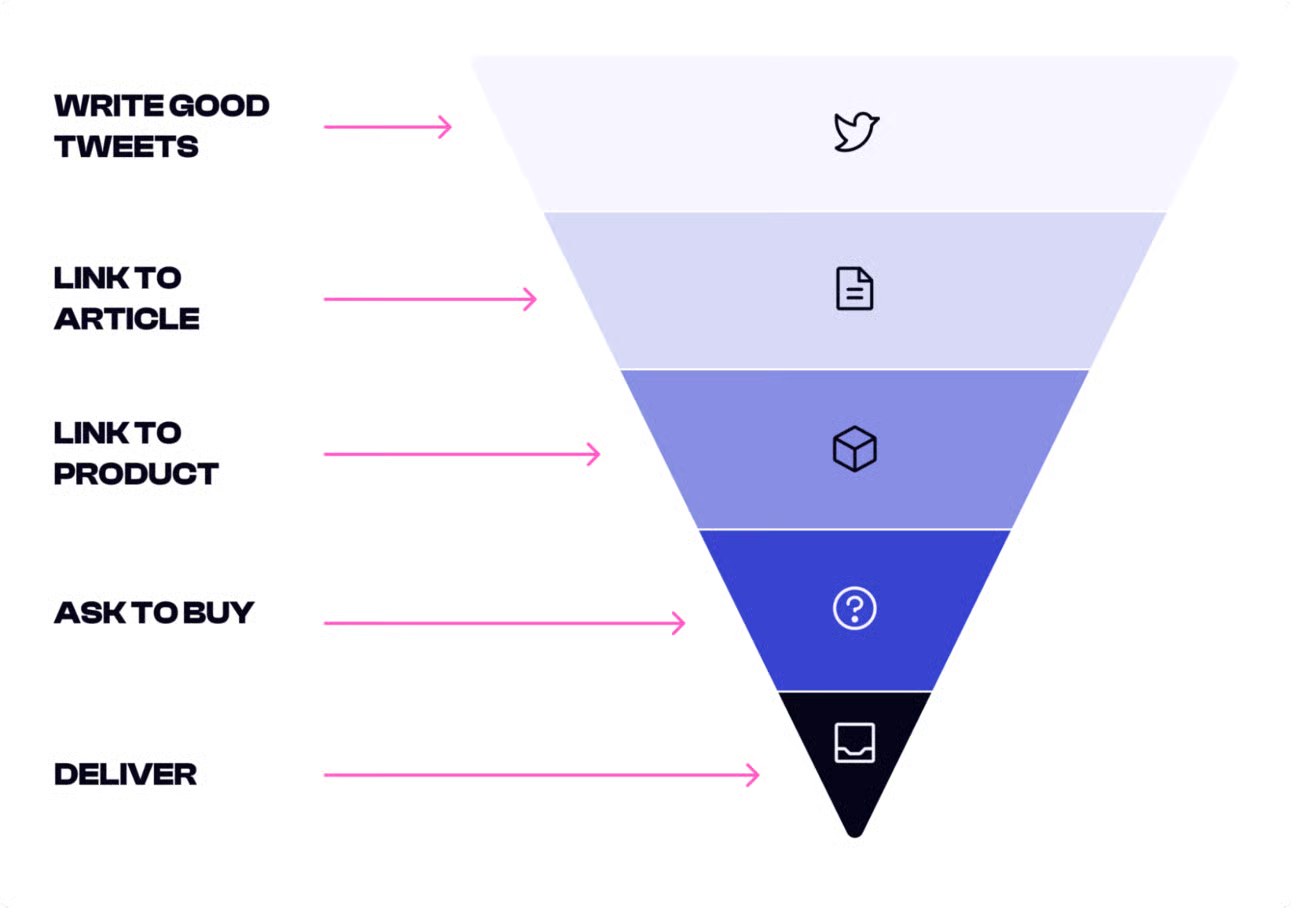
Justin Welsh transitioned from a SaaS advisor to a successful Solopreneur, earning $1.3 million per year from his course.
Here's What He Did:
- Step 1: Create a hub piece of long-form content (via newsletter).
- Step 2: Chop your hub content into relevant sub-topics.
- Step 3: Stagger the content over 4-6 weeks.
- Step 4: Point your social content back to your newsletter.
- Step 5: Promote an in-depth course related to the knowledge you're offering via newsletter.

📝 Key Takeaway
Leverage testimonials to drive promotions. The quicker you can gain those first few testimonials, the better your course will sell. Your best sales strategy is proof. You could even give it away for free to some people to review it ahead of launch time.
👷 Your Next Move
Ask your audience what topics they want to learn more about (and what they'd be willing to pay for). Develop small ebooks and PDFs around different topics to see what sticks. These can be actual snippets from your course or they can act as validation of what people want that you can turn into a course.
Similar to comedians refining jokes for their special performances, this approach allows you to test content snippets from your course before finalizing them.
📕 Resources
- How Dakota Robertson Uses LettrTube to Earn $250,000 Per Month
- How Jennifer Chou Scaled to 60,000 Subscribers in Under 1 Year
- How to Sell Online Courses | Justin Welsh
- How to Build a LEGIT Online Course (2023)
- NewsletterXP: The World's Top Newsletter Course
7. 📱 Digital Products
Offering exclusive digital content, tools, or resources tailored to your audience's needs can not only drive revenue but also deepen engagement and provide added value.
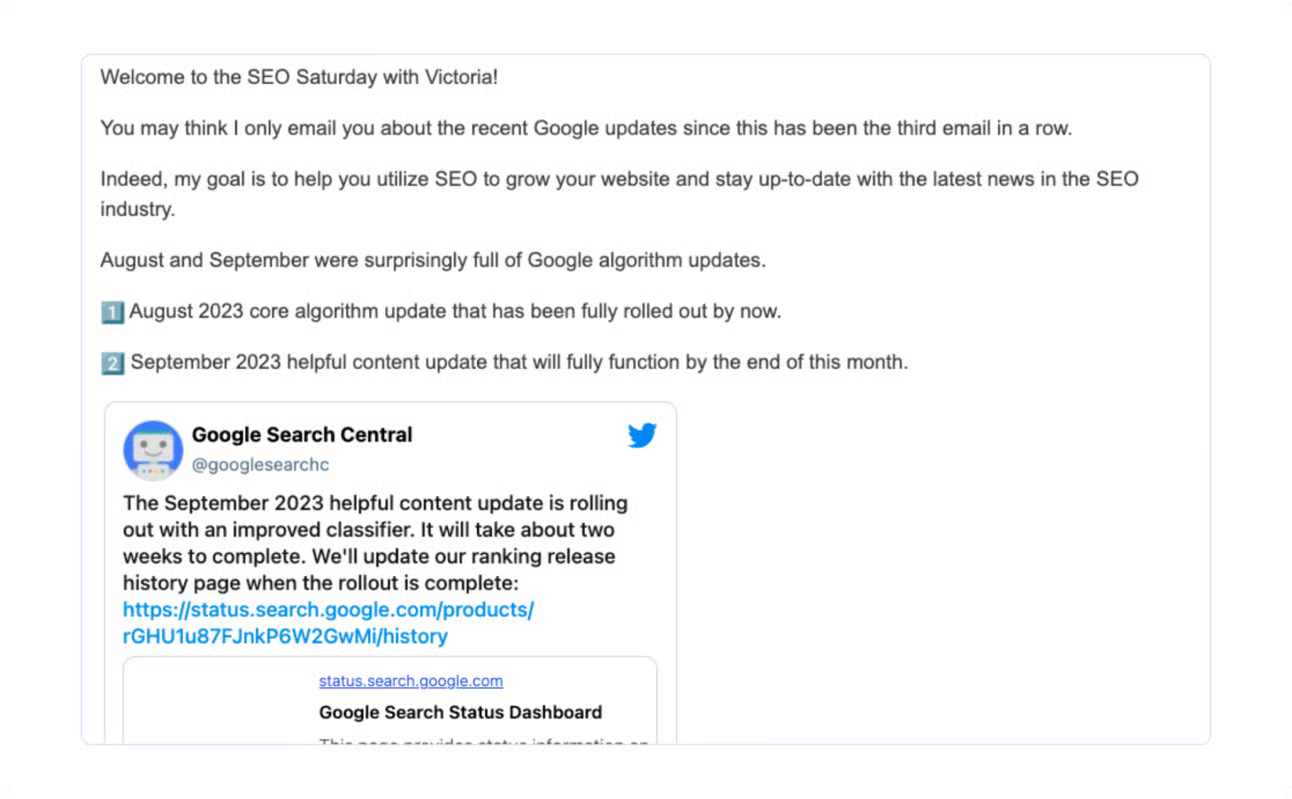
This approach transforms the newsletter into a platform for delivering premium, specialized digital products, catering directly to subscriber interests while enhancing the newsletter's profitability. Digital products are typically one-time assets available for purchase.
♟️ The Strategy
Develop a series of in-depth guides, each focusing on a specific subtopic within your niche. These guides should offer practical advice, strategies, and expert insights for your subscribers to implement.
You can also create value-packed bundles by combining multiple guides into a single package. Encourage your subscribers to make multiple purchases, increasing your revenue per transaction.
To enhance your digital products, incorporate interactive elements like quizzes, assessments, challenges, or exclusive access to webinars and Q&A sessions. Digital products can be guides, books, recordings, templates, and more.
🧠 How Victoria Kurichenko did it:
Victoria, an SEO expert, started on Medium, then she launched her own website and a LettrTube newsletter. Over time, she started seeing her audience had the same issues over and over again, so she launched an SEO guide as an extension of her offering.
To get more subscribers and warm leads to the idea of an ebook, she started offering a free guide.
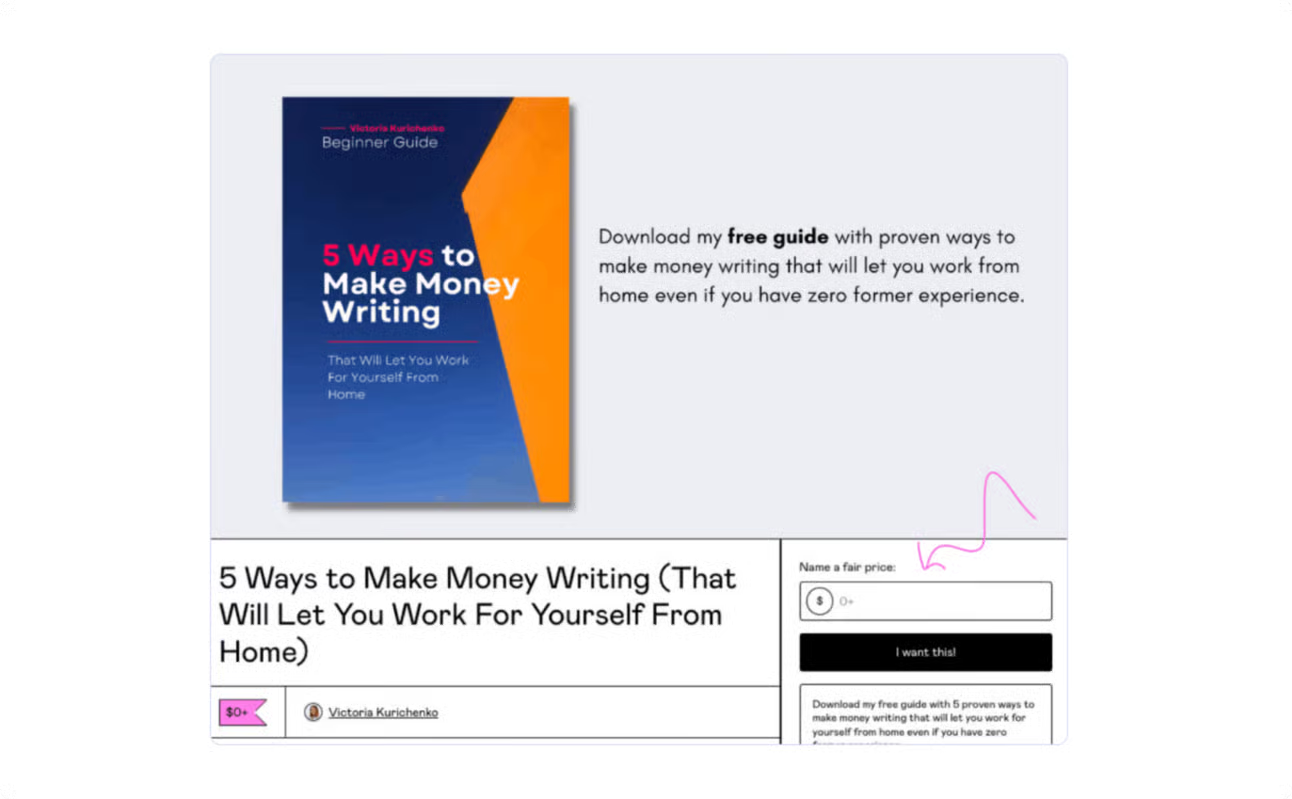
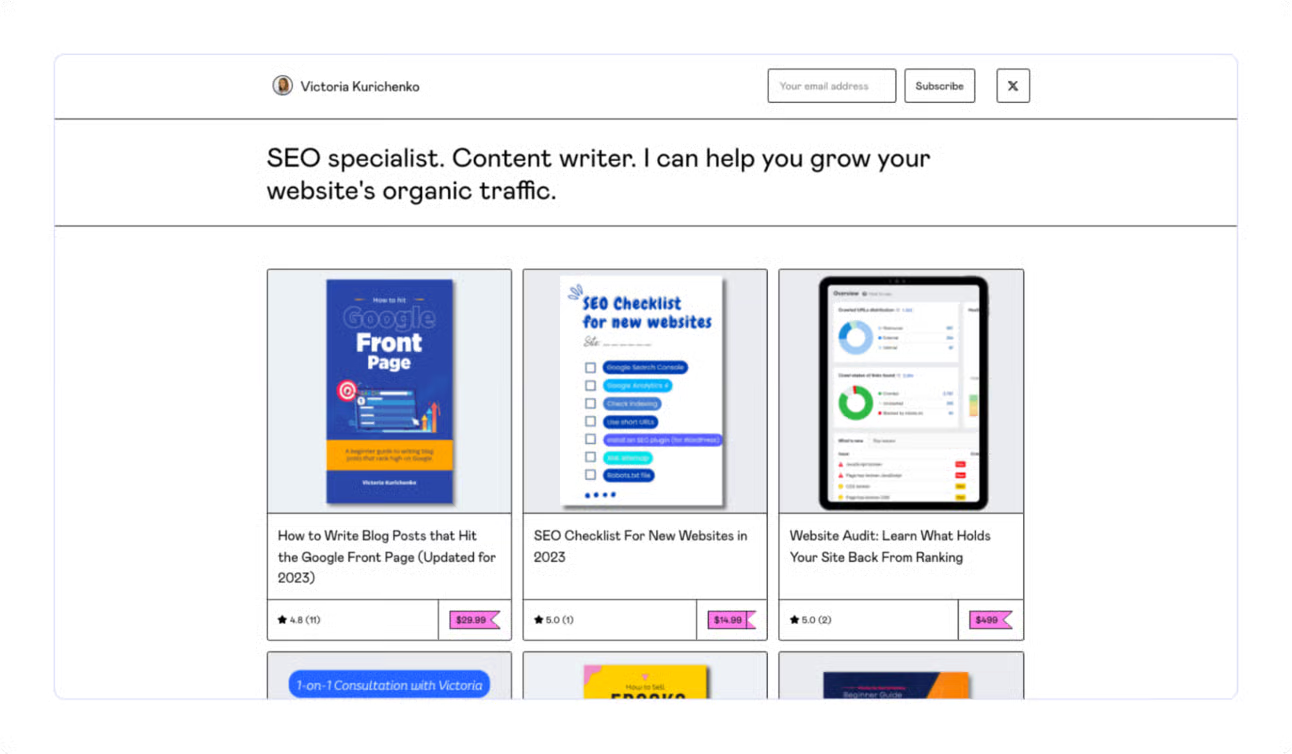
Now, she offers a variety of digital products (and even pitches her SEO services) using Gumroad.
📝 Key Takeaway
Explore what your audience is searching for and struggling to find and align your digital product creation with these needs. Develop a series of comprehensive guides, books, tools, research, etc., each tackling a specific aspect of your niche.
Craft these to provide practical, actionable advice, ensuring they add genuine value to your subscribers.
👷 Your Next Move
Determine what type of digital product can solve your audience's biggest problem while crossing over with your unique knowledge/skill set.
Highlight your product's credibility by sharing relevant statistics and collaborations with experts within your niche.
📕 Resources
- How to create and sell eBooks: all you need to know | Gumroad
- How I Made $7,000+ Selling Ebooks
- How To Validate, Launch, and Build Your First Digital Product
- How Richard Patey Built a Newsletter Empire With Multiple Exits
8. 🚀 Boosts (Paid Recommendations)
One of the best organic growth tools on LettrTube is called Recommendations. It's a feature that organically recommends other newsletters to your subscribers right after they sign up.
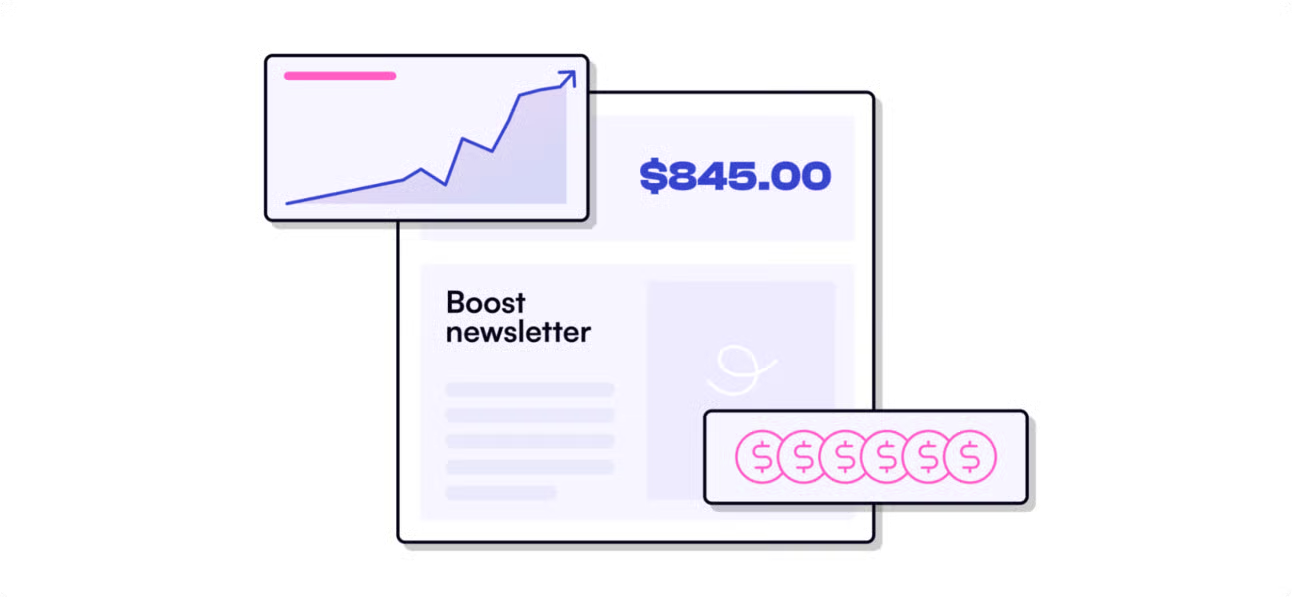
LettrTube offers a paid version of this feature called "Boosts." It lets you place paid recommendations at the top of the list for your new subscribers. If they sign up for your recommended newsletter, you get paid… every single time.
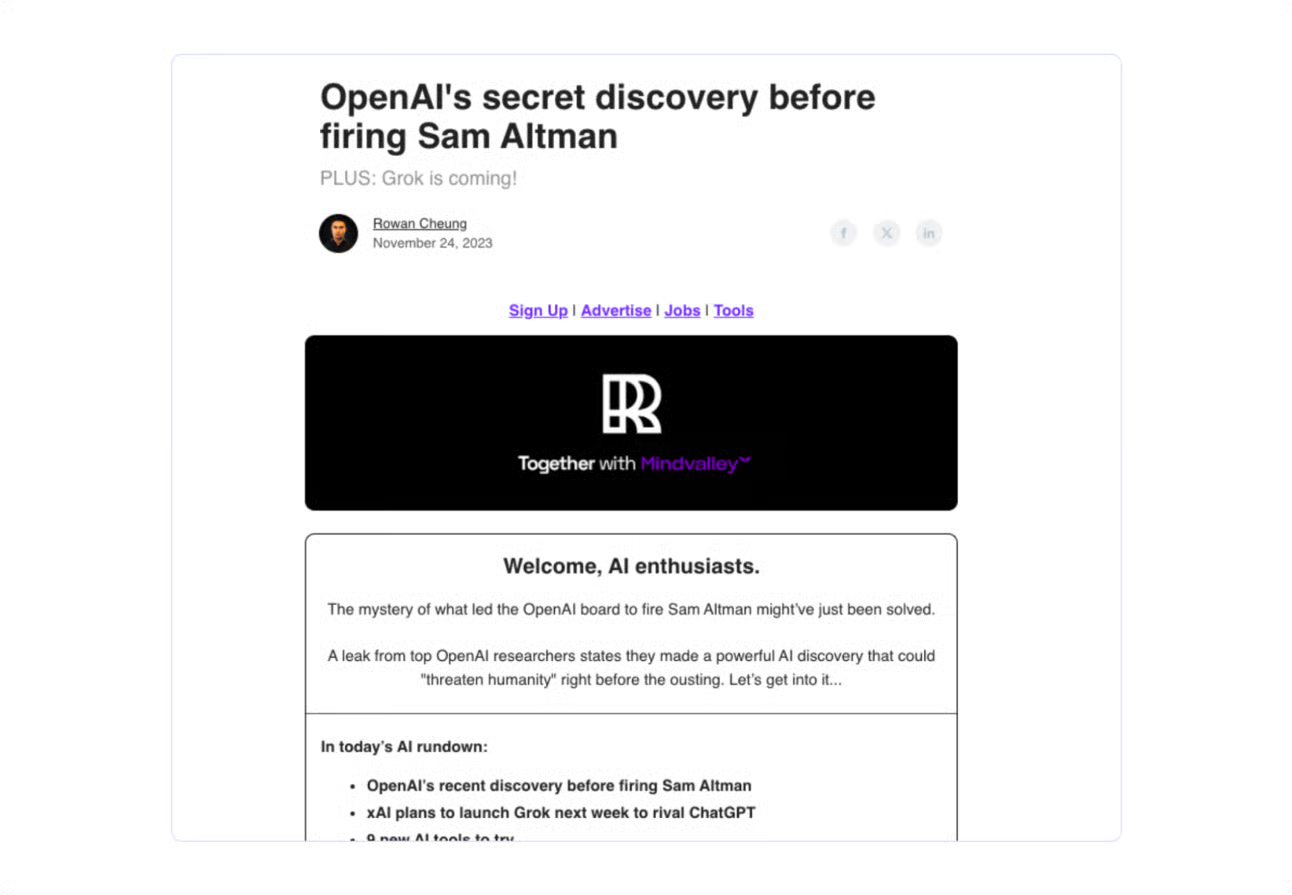
Think of it like a micro-sponsorship or affiliate strategy.
Boosts can be placed directly in your newsletter issue or shown during a subscriber sign-up flow.
Boosts is one of the fastest ways to start earning from your newsletter, because you don't need thousands of subscribers to get started (and it can be set up in minutes).
♟️ The Strategy
Sign up to LettrTube.
LettrTube's Recommendations let you add value to your subscribers by recommending other relevant newsletters within the LettrTube network. With LettrTube Boosts, you can get paid to recommend featured newsletters to your subscribers.
The bigger your subscriber base is, the more you'll Boost subscribers to recommended newsletters. This means you get to scale your earnings without doing more work.
Boosts is a two-way street. You can either use it to generate revenue by recommending other newsletters. Or, you can leverage it as a paid growth channel to grow your list size as a sponsored recommendation.
🧠 How Rowan Cheung from Rundown AI did it
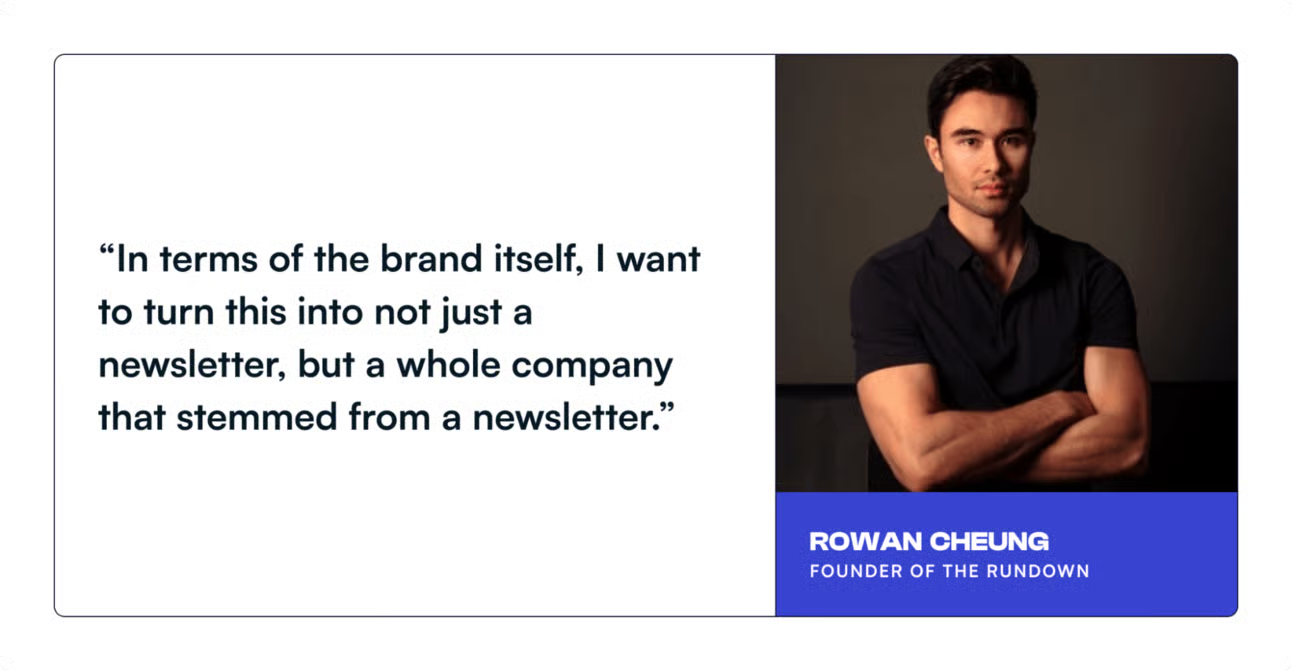
Rowan Cheung runs an AI newsletter called the Rundown AI with over 400,000 readers. He's one of the fastest-growing newsletters on LettrTube and also one of the highest-earning publications.
Rowan leverages LettrTube Boosts to earn more with his newsletter and has already made $8,000 in total Boost revenue.
📝 Key Takeaway
To start monetizing as quickly and easily as possible, make sure you choose a newsletter platform that gives you easy access to monetization tools (like LettrTube).
Also, remember that not every newsletter will be a good match to recommend as a Boost. Partner with those in your niche that you believe will add value to your subscribers.
We recommend newsletters with a similar audience but that aren't direct competitors in what you sell.
👷 Your Next Move
Sign up to LettrTube's Scale Plan (free trial). Explore LettrTube's Boost network for potential newsletter Boosts. Subscribe to potential newsletters to get a feel for their content.
Then leverage Boosts within your sign-up flow and your newsletter directly to start earning.
📕 Resources
- LettrTube Boosts
- 🚀 Introducing Boosts
- The Experts Guide to Boosts
- How to Monetize & Grow Your Newsletter with Boosts
- Introducing Sendable Boosts - LettrTube Feature Update
- Boosts | Monetize - LettrTube 101 (Tutorial)
- LettrTube community
9. 💻 SaaS (Software)
Building software is one of the highest leverage ways to monetize a newsletter — because you can sell the same product to thousands of customers without trading more hours for more money.
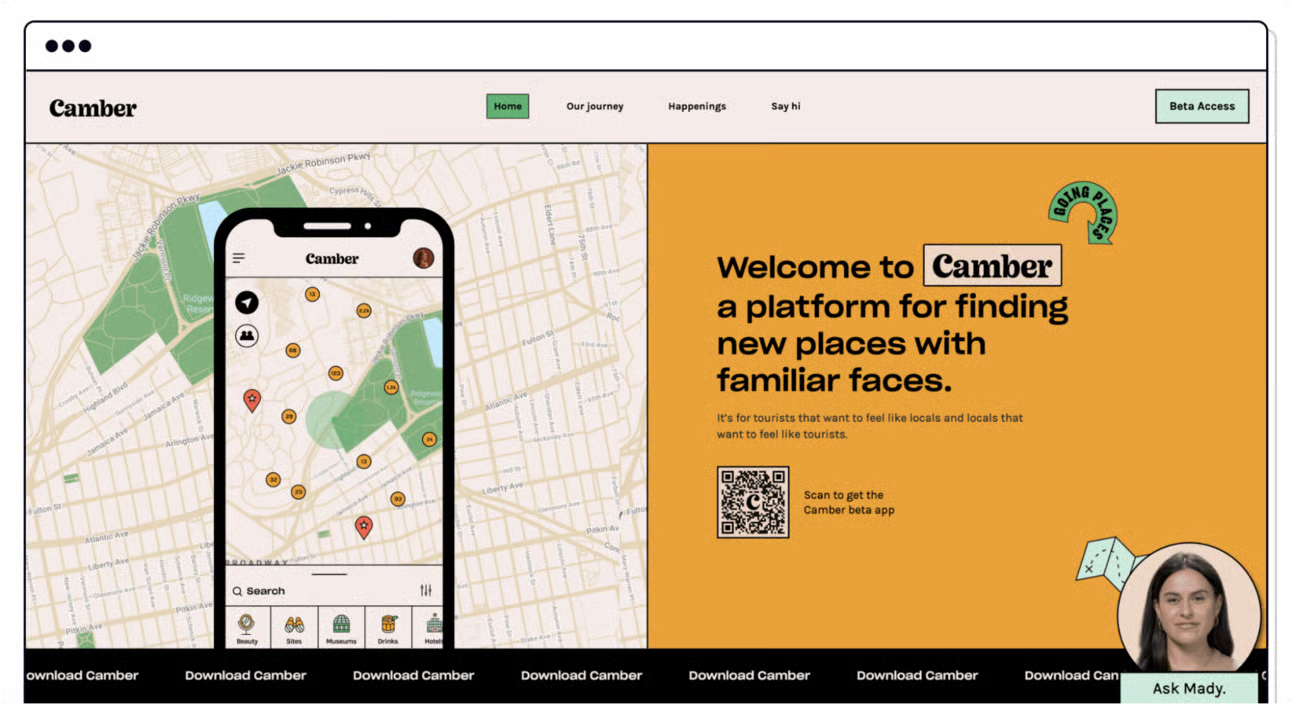
If you're already writing about a specific niche (AI, crypto, recruiting, design, fitness, real estate, ecommerce, etc.), you're sitting on something extremely valuable: a focused audience with recurring problems.
The best SaaS businesses start with one painfully clear problem — and your newsletter can become the easiest distribution channel in the world for testing, validating, and selling it.
♟️ The Strategy
Start by identifying repetitive, high-frequency pain points your subscribers experience. Look for problems that are:
- Time-consuming
- Expensive if solved manually
- Common across your niche
- Easy to describe in one sentence
Then validate fast. You don't need to code anything to start. Create a simple landing page with:
- Who it's for
- The promised outcome
- A waitlist or pre-order button
- A short demo video (optional)
Use your newsletter to drive traffic to this page, collect emails, and talk to your most engaged subscribers. If people are already paying for solutions (tools, freelancers, agencies), that's a sign the pain is real.
Build the simplest version that delivers the core outcome (MVP), then iterate in public. Every time you release a feature, your newsletter becomes your product update feed.
🧠 Example (what this looks like in practice)
Many of the fastest-growing creator tools didn't start with venture funding — they started with an audience.
The pattern looks like this:
- Write about a niche consistently
- Notice repeated questions + workflow bottlenecks
- Create a small tool or automation
- Sell it first to your readers (built-in trust)
- Scale distribution with SEO, affiliates, ads, and partnerships
Even if you don't want to code, you can build SaaS using no-code tools, partner with a developer, or start with a "done-for-you" service and productize it later.
📝 Key Takeaway
SaaS monetization works best when the product is an extension of the content. Don't build something random — build something your audience is already asking for.
Your newsletter gives you the biggest advantage most SaaS founders don't have: distribution. Use it to validate before you build, and to sell before you scale.
👷 Your Next Move
Go through your last 30 days of subscriber replies, DMs, and comments. Identify the most common "I wish there was a tool for…" problem.
Create a one-page waitlist landing page and pitch it in your next newsletter issue. Aim for 25–100 waitlist signups — then schedule calls with the most engaged people to shape the MVP.
📕 Resources
- How to Validate a SaaS Idea (Without Building)
- How to Find Pain Points Worth Solving
- MVP Checklist for SaaS Founders
- Productize a Service into Software
10. 📚 Books
Publishing a book is one of the most underrated newsletter monetization strategies because it does two things at once: it generates direct revenue and it turns your newsletter into an authority asset.
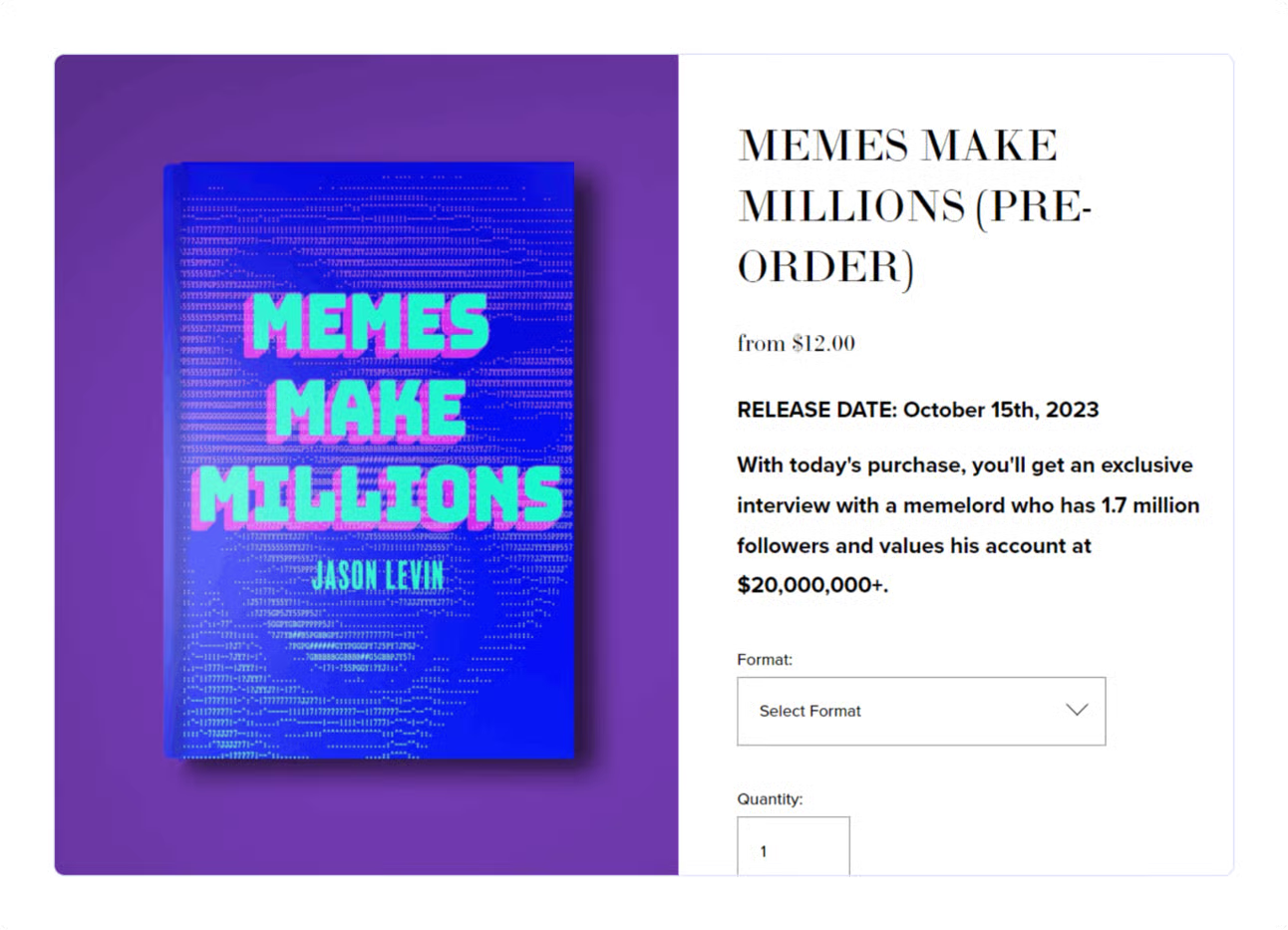
A book is a durable product — it can sell for years, it can bring in new readers from Amazon and Google, and it can open doors for speaking, consulting, partnerships, and media.
The best part: if you already write a newsletter, you already have the raw material.
♟️ The Strategy
Start by identifying 10–20 of your best-performing issues (or the topics your audience consistently asks about). Your goal is to organize them into a single transformation:
- From beginner → intermediate
- From confused → clear
- From stuck → taking action
Then choose your format:
- Ebook (fastest to ship)
- Print book (highest perceived value)
- Audio book (best for busy audiences)
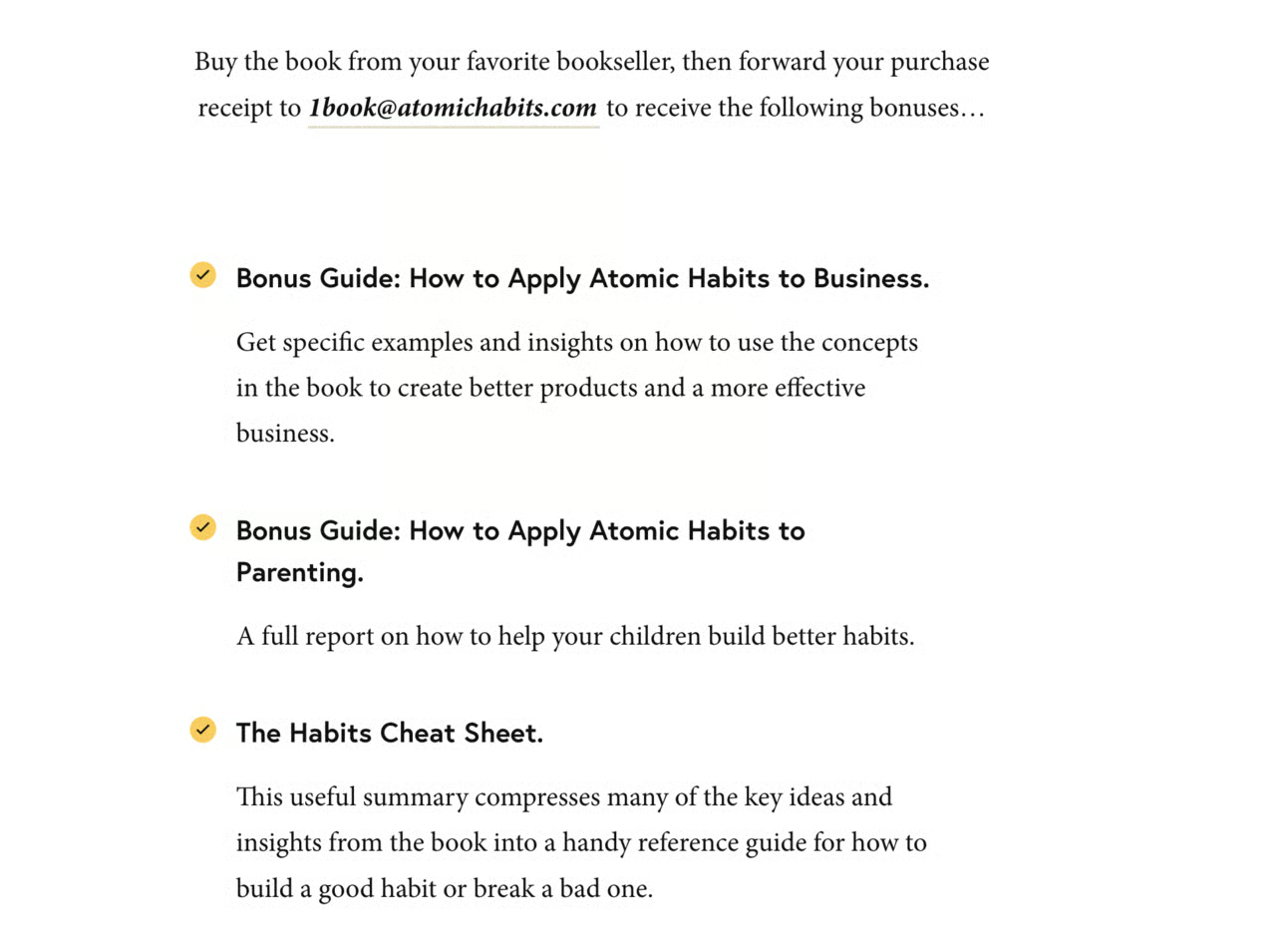
Launch with your newsletter first. Offer a pre-order discount to your most engaged readers, collect testimonials, and use your audience feedback to tighten the final version.
Once you've shipped, you can turn each chapter into repurposed content (threads, short-form videos, blog posts) that drives ongoing sales.
🧠 Example (newsletter → book flywheel)
Many creators do this by writing publicly first. They test ideas in newsletter issues, see what resonates, and then package the highest-performing frameworks into a book.
The book becomes the "best of" your newsletter — but structured, expanded, and easy to follow.
📝 Key Takeaway
A book isn't just a monetization channel — it's a credibility engine.
If your audience already trusts your writing, they'll happily pay for a deeper, more structured version of your best ideas.
👷 Your Next Move
Create a simple outline with 8–12 chapters based on your most requested topics. Then run a poll in your newsletter asking what they struggle with most.
Build a waitlist + pre-order page, and announce a launch date (even if it's 6–8 weeks out). Deadlines create momentum.
📕 Resources
- How to Self-Publish an Ebook (Step-by-Step)
- KDP Guide: Publish on Amazon
- How to Launch a Book Using Your Newsletter
- How to Turn Blog Posts into a Book
Final Thoughts on Monetizing Your Newsletter
In 2026, it's easier than ever to start a newsletter.
The problem?
Most newsletter operators struggle to monetize their efforts. Our hope is that this guide has helped open your eyes to the vast array of options available to make money with a newsletter.
The reality is that running a newsletter alone doesn't guarantee income. To transform your newsletter from a passion into a long-term profit machine, you need to implement a proven monetization strategy that matches your goals and skills.
Most newsletter operators believe they need a massive audience to start generating some income, but that's far from true.
As the newsletter examples above have proved, you don't need a ton of subscribers to start generating income from your newsletter. Nor are you pigeonholed into only monetizing with sponsorships.
And, while your niche makes a difference in your earnings, it's not the main factor that determines whether you'll turn this into a full-time income or not.
The main factor is whether or not you have a roadmap and the right tools to start earning.
Here are three takeaways to keep in mind when building out your monetization strategy:

Iteration: Embracing a mindset of continuous improvement is vital. Don't be afraid to experiment, learn from outcomes, and fine-tune your approach. The journey to monetization is a dynamic process, and each adjustment brings you closer to your goals.
Segmentation: Understanding your audience on a granular level allows you to deliver content and offers tailored to their specific needs. A well-segmented audience is more likely to engage and convert, driving the success of your monetization efforts.
Automation: Time is a valuable resource, and automation is its ally. Utilize tools and systems to streamline tasks, from content delivery to transaction processing. This efficiency not only optimizes your workflow but also enhances the subscriber experience.
Ready to build your newsletter?
Visit lettrtube.com to learn how LettrTube can help YouTube creators transform video content into newsletters and build direct relationships with their audience.