How To Build a Newsletter Referral Program
Why referrals work, what to avoid, and how to set up a compounding growth loop.

Your readers trust recommendations from people they know, far more than any ad. That's why a newsletter referral program can transform slow subscriber growth into something that compounds week after week.
I've used referral programs to grow my list with lower costs and higher-quality subscribers. The referral program benefits are real, and LettrTube makes launching an email referral program surprisingly simple.
In this guide, I'll cover why referrals work, common mistakes to avoid, how to set up your program inside LettrTube, and what I've learned from running my own referral programs.
Why Referral Programs Work for Newsletter Growth
The psychology behind referrals is surprisingly simple. When a friend recommends something, we trust it. This is social proof in action. We assume that if someone we know took the time to share something, it must be worth our attention.
Newsletters are uniquely positioned to benefit from this dynamic. Unlike products that require a purchase decision, subscribing to a newsletter is low-friction.
All it takes is an email address.
That low barrier to entry, combined with the trust that comes from a personal recommendation, creates the perfect conditions for viral growth.
Milk Road used LettrTube's referral program to grow rapidly and sold for millions within 10 months. The Brink gained 14,000 new subscribers in their first month using LettrTube's built-in referral tools. These newsletter referral program examples show what happens when you give engaged readers a reason to share.
The compounding effect is where things get interesting. Each new subscriber becomes another potential referrer. If even a small percentage of your audience participates, you create a growth loop that feeds itself. This is why referral programs remain one of the most cost-effective strategies for newsletter growth.
Common Mistakes in Newsletter Referral Programs
Before diving into setup, let's talk about what goes wrong. I've seen plenty of newsletter referral program examples that launched with fanfare and fizzled within weeks. The mistakes are usually predictable.
Offering rewards that don't match your audience is the first pitfall.
A newsletter about minimalism probably shouldn't offer branded merchandise that clutters up someone's home. A finance newsletter might do better with exclusive content or early access rather than physical swag.
Milk Road nailed this by offering a simple crypto investor PDF for one successful referral, fully automated via LettrTube. The reward matched exactly what their readers wanted. Think about what your readers actually value.
Setting milestones too high kills momentum before it starts. If your first reward requires 25 referrals, most readers won't even try.
Start with achievable goals. Even one or two referrals should unlock something small. Quick wins keep people engaged.
Failing to communicate progress is another common issue. Readers forget about referral programs when they don't see regular updates. You need to remind them how close they are to the next milestone. Automated emails that show referral counts and upcoming rewards make a significant difference.
Finally, overcomplicating the reward structure confuses people. If your program requires a flowchart to understand, you've already lost.
Keep it simple: refer X friends, get Y reward. Clarity drives participation.
How a Newsletter Referral Program Works
Understanding the mechanics helps you build a program that actually converts. Let's break down the core components.
The Basic Structure of a Referral System

Every email referral program follows a similar flow:
- A subscriber receives a unique referral link after signing up.
- The subscriber shares that link with friends, family, or their social media followers.
- When someone subscribes through that link, the referral is tracked and attributed to the original subscriber.
Once referrals start coming in, milestones create the incentive structure:
- Reach 3 referrals, unlock a bonus newsletter
- Reach 10, get a sticker pack
- Reach 25, receive exclusive merchandise
These tiers give readers something to work toward and celebrate when they hit each level.
The best programs make sharing effortless. Pre-written social posts, one-click copy buttons for referral links, and email templates all reduce friction. Every extra step you remove increases participation rates.
Choosing Rewards That Motivate Readers
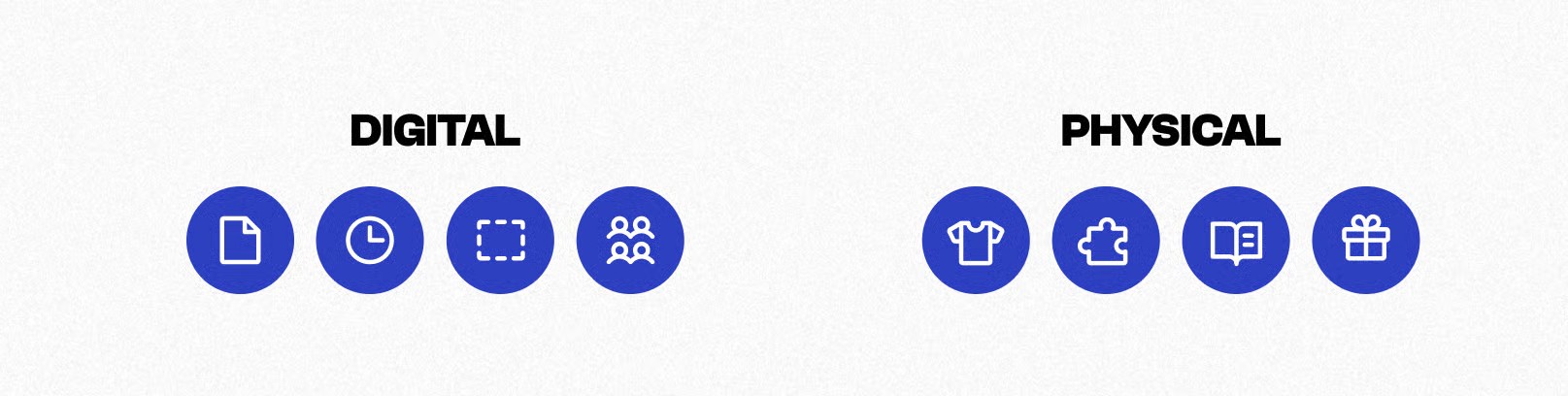
Referral program ideas fall into two broad categories: digital and physical.
Digital rewards include:
- Exclusive content
- Early access to new features
- Bonus newsletters
- Templates and guides
- Access to a private community
Physical rewards include:
- Stickers
- Merchandise
- Books
- Personalized items
Digital rewards are easier to fulfill and scale infinitely. You create the content once and deliver it automatically to everyone who hits the milestone. There's no inventory to manage and no shipping costs to absorb.
Physical rewards create stronger emotional connections. There's something satisfying about receiving a package in the mail because you supported a newsletter you love. The unboxing moment often gets shared on social media, creating another layer of organic promotion.
The most effective programs blend both approaches. Start with digital rewards at lower tiers to maintain margins and then introduce physical rewards at higher milestones to celebrate your most dedicated advocates.
Tracking and Attribution Made Simple
Manual tracking is a nightmare.
I tried running a referral program with spreadsheets early on, and it lasted about two weeks before I gave up. The time I spent verifying referrals, updating counts, and sending reward notifications ate into my content creation time. Mistakes crept in, subscribers got frustrated, and the whole system felt fragile.
Automation changes everything. Modern referral tools generate unique tracking links for each subscriber automatically. When someone signs up through a referral link, the system attributes it to the referrer, updates their count, and triggers the appropriate notifications – no manual data entry required.
LettrTube handles this natively. There's no need to connect third-party tools or build custom integrations. Referrals are tracked automatically, milestones are managed within the platform, and reward notifications go out without any manual intervention. You focus on creating content while the system handles the logistics.
Why Trust Me: With five years of marketing experience, I've honed my ability to develop profitable marketing funnels and campaigns. I share some of my strategies in this article. Feel free to reach out to me on LinkedIn anytime!
Setting Up a Referral Program Inside LettrTube
One of the reasons I recommend LettrTube for newsletters is how seamlessly the referral program integrates with everything else. You don't need to duct-tape tools together or pay for additional subscriptions. The referral system is built right into the platform.
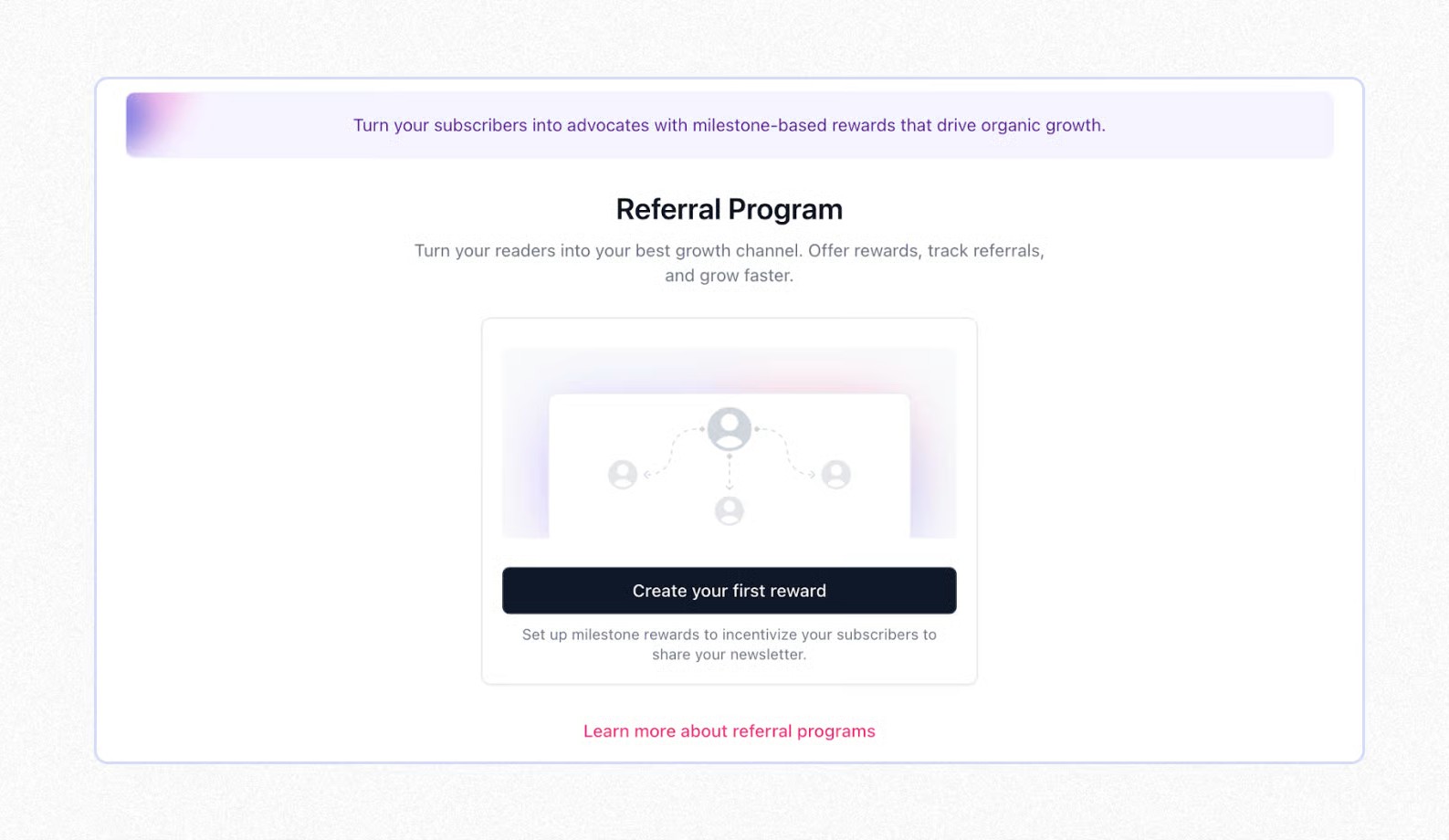
From your LettrTube dashboard, navigate to the Grow section and click on Referral Program. You'll see an option to create milestones, define rewards, and customize the referral experience.
Here's how to structure the Referral Program effectively.
When To Launch Your Referral Program
You don't need a massive list to start. A few hundred engaged subscribers are enough.
What matters more is engagement. If your open rates are healthy and readers reply to your emails, they're primed to share.
Waiting too long costs you growth. Every new subscriber who joins without a referral program is a missed opportunity. They're most excited about your newsletter in the first few weeks. Capture that enthusiasm early.
Launch when you have at least one compelling reward ready and a clear way to fulfill it. You can always add more tiers later.
Creating Reward Tiers That Scale
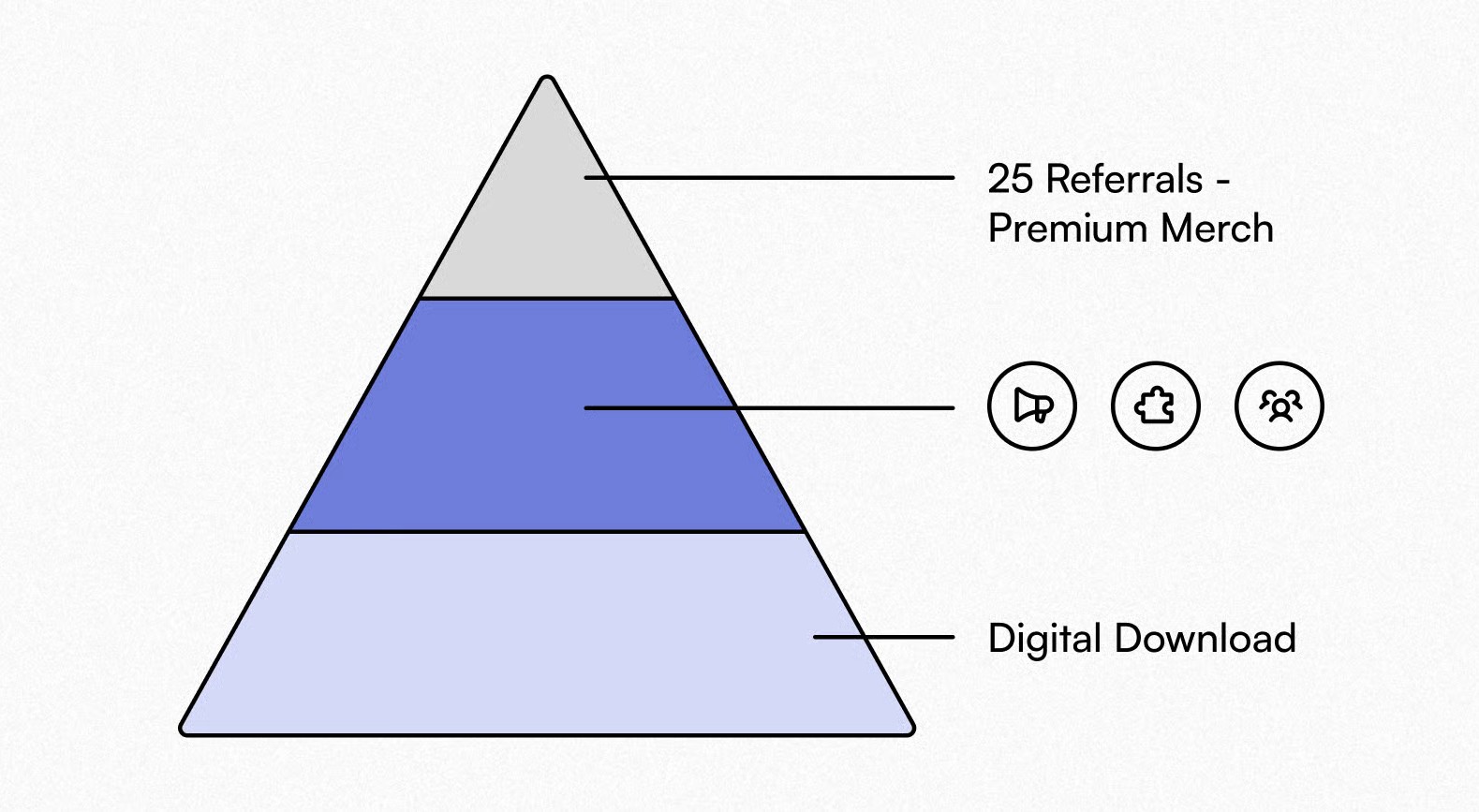
Start simple. I recommend beginning with three to five milestones. Too many tiers overwhelm readers and complicate your fulfillment process. You can always add more later once you understand what resonates with your audience.
Here's a structure that works well:
- One referral unlocks a digital download or bonus content.
- Three referrals earn a shoutout in the newsletter.
- Five referrals deliver a sticker pack or small merchandise.
- Ten referrals grant access to a private community or exclusive content library.
- Twenty-five referrals receive premium merchandise or a personal thank-you video.
Keep rewards relevant to your niche. A productivity newsletter might offer Notion templates. A cooking newsletter could share secret recipes. A business newsletter might provide case study breakdowns.
The more aligned your rewards are with why people subscribed in the first place, the more motivated they'll be to participate.
Automating the Referral Experience
LettrTube automatically sends referral notifications when subscribers hit milestones. These emails include the reward details and instructions for claiming them. You set it up once, and the system handles the rest.
The platform also supports single-use promo codes for physical rewards. If you're partnering with a Shopify store or using a drop-shipping service, you can upload codes that get distributed automatically. This prevents abuse while keeping fulfillment hands-off.
Adding a referral section to your newsletter is a one-click operation. LettrTube provides a widget that displays each subscriber's unique link, their current referral count, and progress toward the next milestone. It's a constant, low-pressure reminder that the program exists.
Monitoring Referral Data and Engagement
LettrTube's analytics dashboard shows you exactly how your referral program is performing. You can see total referrals, which subscribers are driving the most sign-ups, and which milestones generate the most excitement.
Pay attention to where subscribers drop off. If everyone hits the first milestone but nobody reaches the second, the gap between them might be too wide.
If a particular reward doesn't seem to motivate action, test something different.
The data also reveals your super-referrers. These are the subscribers who consistently bring in new sign-ups. Consider reaching out personally to thank them or offering additional perks. They're your biggest advocates, and nurturing those relationships pays dividends.
How To Announce Your Referral Program
Your launch email sets the tone. Don't bury the announcement in a regular newsletter. Send a dedicated email that explains the program clearly.
Include these elements:
- What the program is and why you created it
- The specific rewards at each milestone
- How to find and share their unique referral link
- A clear call to action to start sharing
Create urgency, if possible. A limited-time bonus for early participants or a launch week incentive can drive immediate action.
Follow up a week later with a reminder or build an automated email sequence to nurture participation over time.
What I've Learned From Running Referral Programs Myself
Looking back at several years of experimenting with newsletter referral program examples, a few key lessons stood out:
- Exclusive content outperformed physical merchandise for my audience. I assumed everyone wanted stickers and mugs, but the exclusive guides and early access to new content drove more referrals. Your audience might be different, so test both.
- Progress reminders increased referrals by about 40%. Sending a monthly update showing each subscriber's count and how close they were to the next milestone re-engaged people who had forgotten about the program entirely.
- Timing referral asks with high-value content works well. After sending an issue that gets a lot of engagement, the following email is a great place to remind readers about sharing. They've just received something valuable and are more likely to want their friends to experience it, too.
If I could go back, I would have started with fewer tiers and simpler rewards. Early on, I overcomplicated things, trying to be creative.
The streamlined approach I use now converts better and takes almost no time to manage.
The referral program benefits compound over time. My program didn't produce massive results in the first month. But after six months, referred subscribers made up nearly 30% of my list.
These subscribers also had higher open rates and better email deliverability than those from paid acquisition. They arrived already trusting the content because someone they knew vouched for it.
Start Growing With Referrals Today
An email referral program remains one of the simplest, most scalable ways to grow your newsletter. With LettrTube's built-in tools, you can have one running today.
Here's everything you need to launch your referral program:
- Define 3-5 reward tiers with achievable milestones (start at 1 referral).
- Choose rewards that match your audience's interests.
- Set up your program in LettrTube under Grow → Referral Program.
- Add the referral widget to your newsletter template.
- Draft your announcement email using a welcome email template.
- Schedule a launch date and promote across all channels.
- Plan monthly progress reminder emails.
The best referral program ideas come from understanding your specific audience. Start simple, track what works, and explore more ways to grow from there.
Your most engaged readers are already your biggest fans. Give them a reason to spread the word and watch your subscriber count grow. Sign up for a free trial of LettrTube today.
Explore the platform:
Visit lettrtube.com to learn more about how LettrTube can support your newsletter workflow.